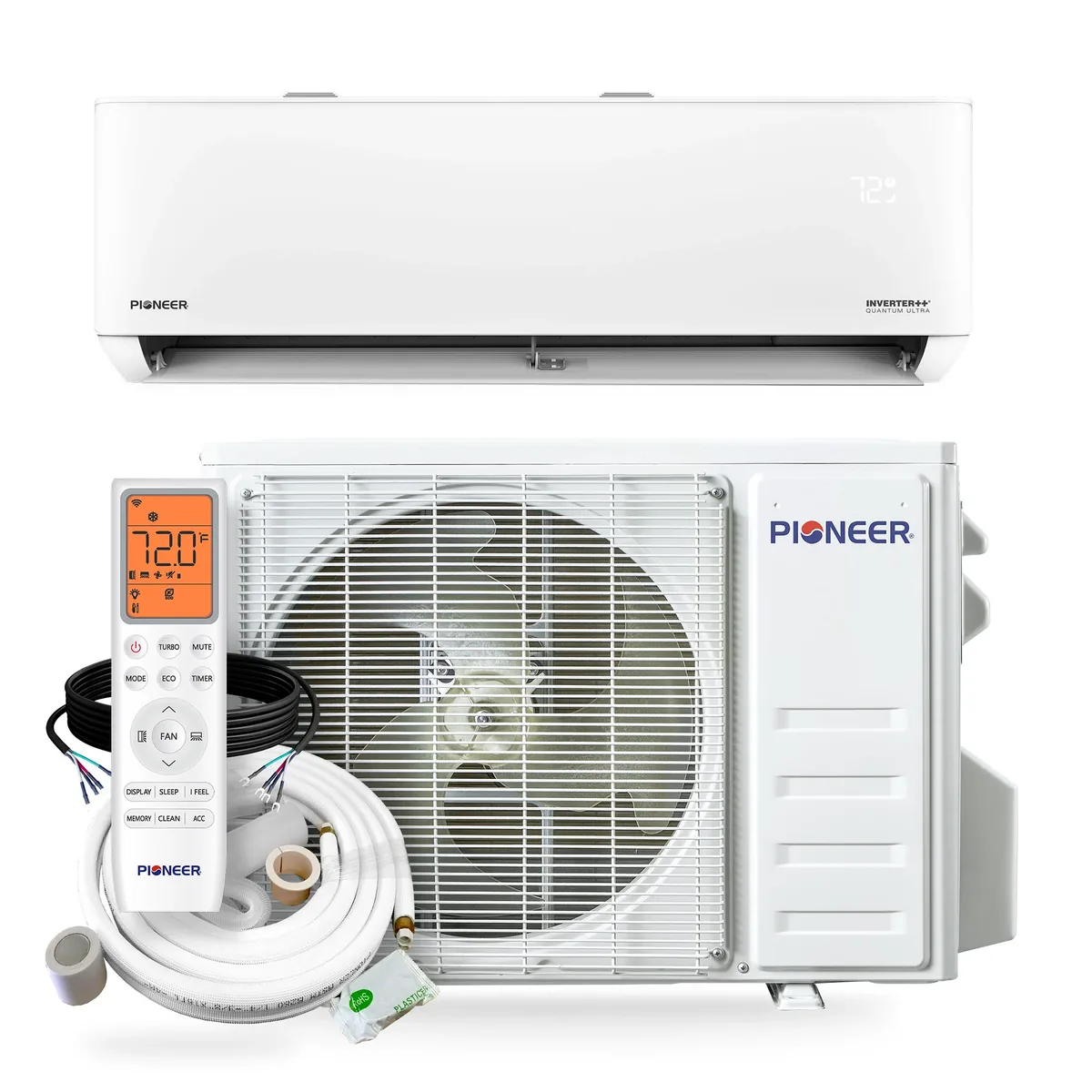
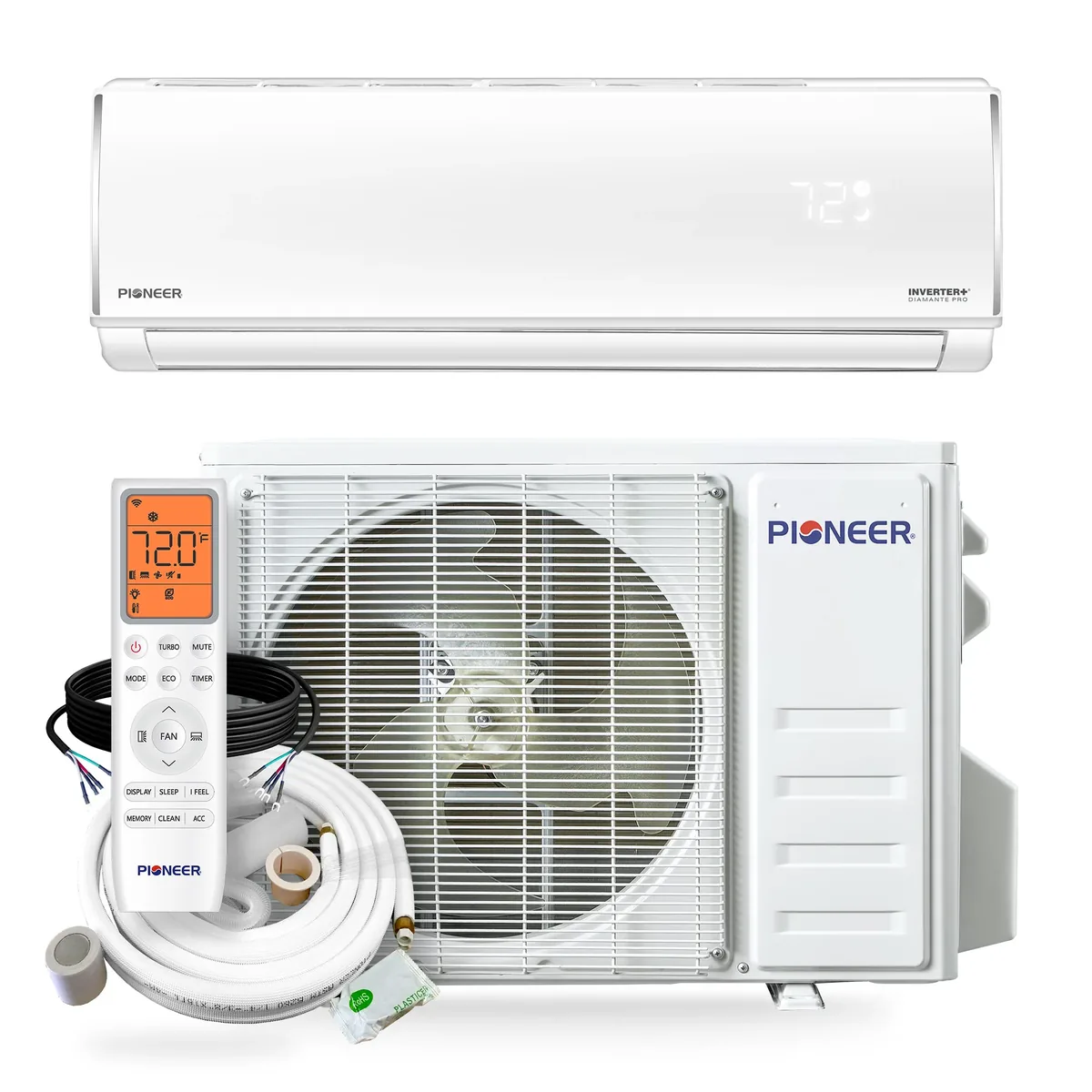
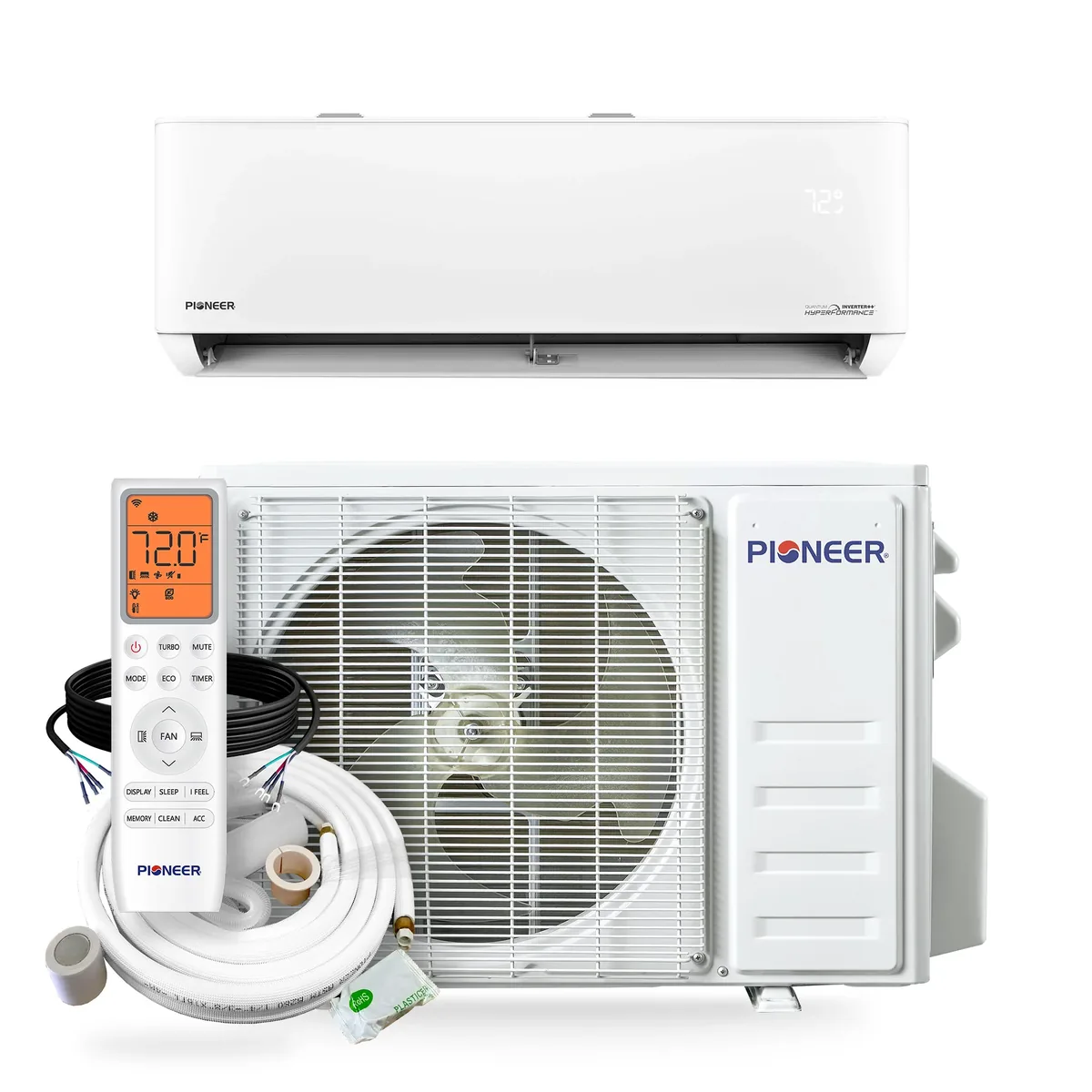
At 12,000 BTU Pioneer's Hyperformance is among the most efficient wall mounts the company sells: 25.0 SEER2, 14.0 EER2 and 10.5 HSPF2 (9.0 in region V), with heating specified to -22°F and Wi-Fi through the Airlink app. The listed heating range is 2,500 to 19,700 BTU/h, so on a mild day it modulates very low and in the cold it can deliver well past its 12,000 nameplate, and NEEP lists it holding the full 12,000 BTU/h at 5°F at a COP of 1.8. At $1,363 it costs about $475 more than the Pioneer Diamante Pro 12k in the existing catalog and sits about $1,750 under Mitsubishi's FX12 at the catalog's $3,128. It is aimed at the same buyer as the Mitsubishi FX12 and Fujitsu KZAH, with a lower price and a thinner body of independent verification.
- 2,500 to 19,700 BTU/h heating range
- Full 12,000 BTU at 5°F (NEEP)
- Highest-rated Pioneer wall unit
Covers the Pioneer (Diamante, Quantum) line as a whole, summarised from 45 owner discussion threads, with the replies on the 12 most-discussed.
Pioneer owners are mostly budget-minded DIYers, and a few are on their second or later unit. The good reports are about value and plain performance: a 9k 110V owner in Houston measured 100 to 105 degree air from the vent at 26 degrees outside, an owner of four WYS Inverter+ units ranging from 12k to 24k calls them silent, and a 24k Quantum WYS owner heating about 1,000 sq ft in 25 to 50 degree weather logged an average draw of around 2.1 kW on high. Sub-line matters here: the WYS units get the warmest words, while the Diamante Pro and the Hyperformance draw complaints from people comparing them with older Pioneers.
The recurring problems are temperature sensing, early refrigerant faults and support. Owners report heads reading about 5 degrees high, one room showing 73 while the room sat at 62, and a Quantum Ultra running up to 8 degrees off set point; support sent that owner a new board, which did not fix it, and then offered a wired controller to act as a permanent Follow Me sensor. Refrigerant errors turn up early: a PC03 fault a week after a DIY install with no leak found, an E04 on a year-old two-head system with a $2,400 quote to replace an indoor coil, a slow flare leak quoted at $1,000, and a 12k that lost its compressor at about 18 months. Support experience splits, with one reply praising the phone support and an owner describing week-long email replies and long holds, plus no weekend line. Install realities include a 6 ft minimum mounting height on the Quantum Hyperformance wall unit, which is why one owner switched to the floor console, and a minimum line-set length you cannot shorten without recovering and reweighing the charge.
On the evidence it suits DIYers who are comfortable flaring, vacuuming and reading error codes and want a low price. For a cold climate the evidence is mixed: a Diamante owner found the manual vague about what happens below the -13F limit, one reply says Pioneer units handle cold poorly, and a Hyperformance owner notes that line is a Hisense rebadge whose remote lacks the Midea Follow Me feature that third-party controls rely on.
What owners like
- +Low prices compared with name-brand systems, with buyers pricing a Diamante Ultra 9k at under $1,000 and a Hyperformance 12k at $1,200 against $1,800 for a Gree Sapphire
- +A 9k 110V owner in Houston measured 100 to 105 degree air from the vent at 26 degrees outside
- +The WYS Inverter+ units run quietly, according to an owner with four of them from 12k to 24k
- +Owners install them themselves with standard flare connections and the charge held in the outdoor unit, and a few are on their second or later install
- +Pioneer sells a Quantum Ultra floor console, which gave one owner a way around the 6 ft minimum mounting height on the Quantum Hyperformance wall unit
- +Warranty support ships parts: one Quantum Ultra owner was sent a replacement board and then offered a wired controller to act as a permanent Follow Me sensor
Common complaints
- −Head temperature readings run off, with owners reporting about 5 degrees high, a room reading 73 while it sat at 62, and a Quantum Ultra missing set point by up to 8 degrees
- −Refrigerant faults appear early: a PC03 a week after install with no leak found, an E04 on a one-year-old two-head system with a $2,400 coil quote, and a slow indoor flare leak quoted at $1,000
- −Some units fail outright in the first two years, including a 12k compressor at about 18 months and a 9k WYT that stopped heating and cooling with no error code
- −Support is uneven: one reply praises the phone support, an owner describes waits of a week for an email reply and holds over 30 minutes, and there is no weekend support
- −The Diamante Pro 12k hums at 60 Hz and pops as the plastic expands, compared with the owner's silent WYS units
- −The 3rd-gen Wi-Fi module can be hard to pair, and the display lights back up every time the unit is powered on, with no app setting to keep it off
- −Charging rules are strict for DIYers: Pioneer gives a 10 ft minimum line set, and with a shorter run the only proper fix is to recover and reweigh the charge
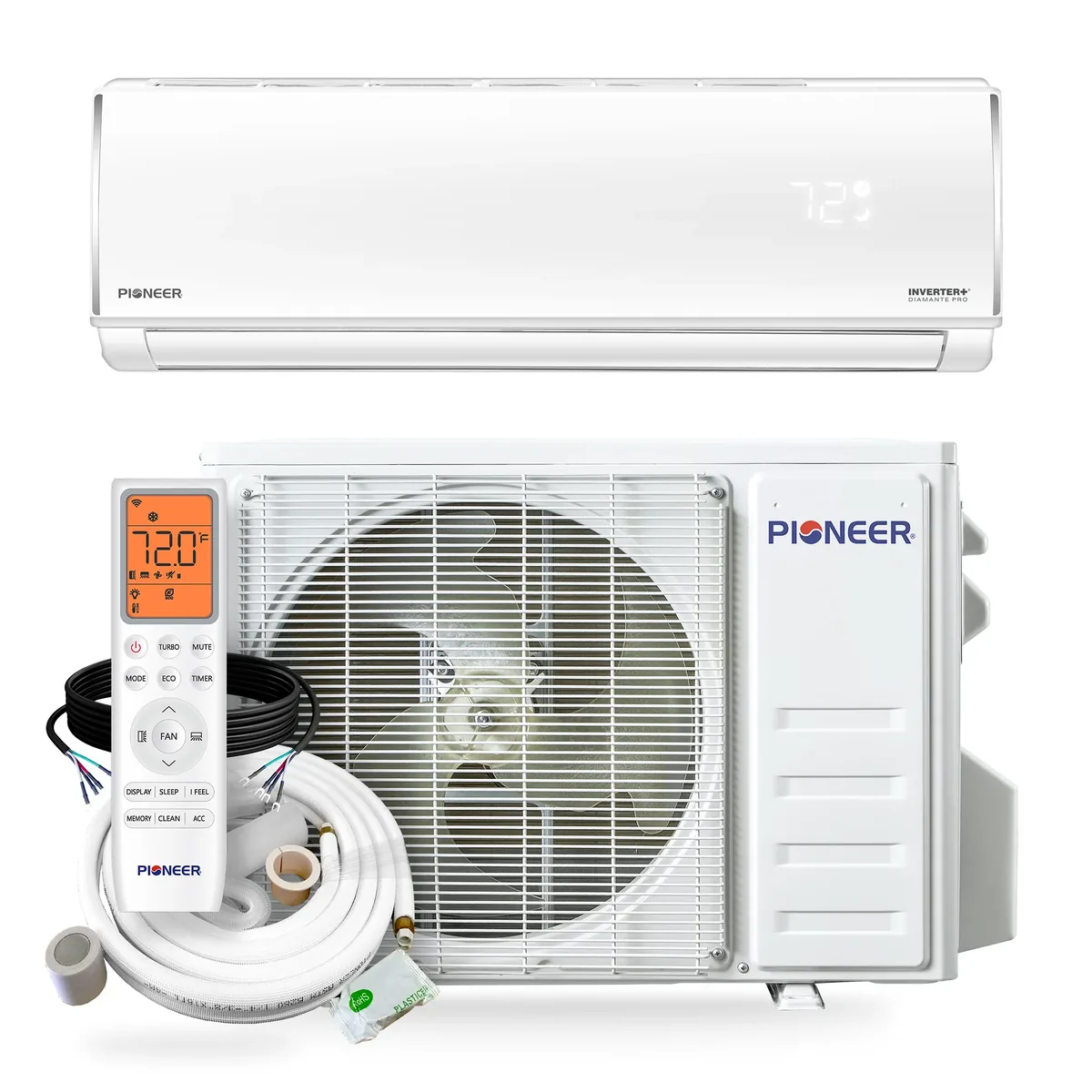 Series photo