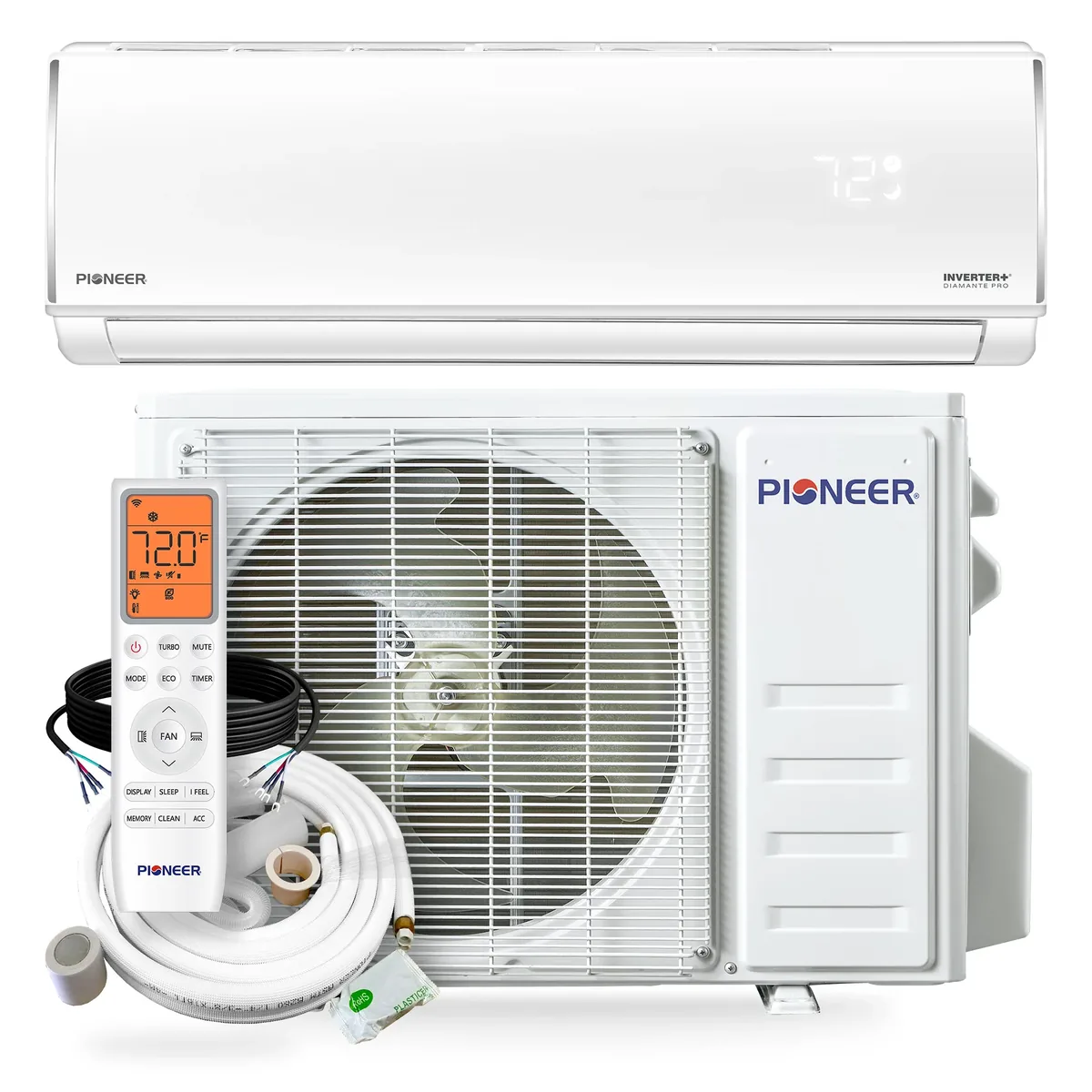
Pioneer · Single-Zone
~$2,198
Pioneer Diamante Pro 36,000 BTU
Large open floor plans, shops or garages where one big head is simpler than a multi-zone setup.
- BTU/h
- 36k
- Volts
- 230
- Refrig.
- R-454B
- SEER2
- 19
- HSPF2
- 9
- Heats to
- -4°F
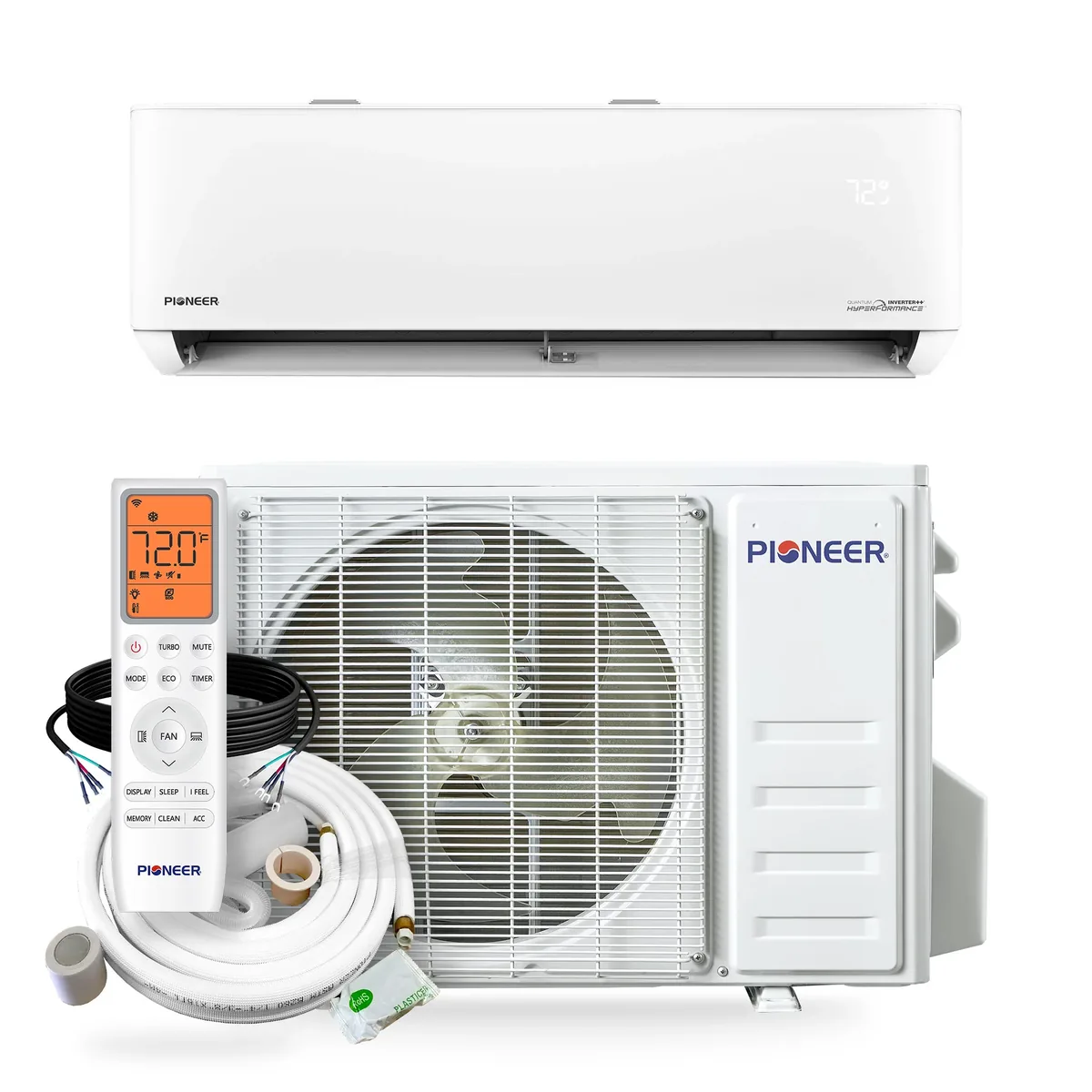
The maker's photo for this series, not this exact size; the outdoor unit grows with capacity
Pioneer · Single-Zone
WT024GLSI25HLH / YN024GLSI25RPH (kit WYT024GLSI25RH-10S)
~$2,278approximate retailer price at last check, equipment only
Paid link: this site earns a commission on qualifying purchases. The price on Amazon may differ.
Best forLarge rooms or open plans in cold climates where a two-ton hyper-heat head from a direct seller fits the budget.
Pioneer's 24k Hyperformance gives a 1,000 sq ft area a -22°F-rated head for $2,278. Ratings are 22.5 SEER2, 11.7 EER2 and 10.0 HSPF2 (8.6 in region V), with a heating range of 4,800 to 26,900 BTU/h, so peak output is about 12% over the 24,000 nameplate. COP2 is 3.3 at 47°F and 1.8 at 5°F, and NEEP lists 22,400 BTU/h at 5°F, about 93% of its rating. Wi-Fi via the Airlink app is part of the listing and the indoor head runs 32 to 49 dB(A). It lines up against the Senville Aura 24k, which Senville's own page rates 21 SEER2 and 13.5 HSPF2, and the Gree Vireo 24k at $2,240 with 19,000 BTU/h of published capacity at 5°F. Pioneer wins on cold output for the money, sold direct by the maker.
At 5°F it still makes 93% of its rated heat, according to the certified NEEP listing for this pairing. Pioneer rates it to keep running down to -22°F.
Pairing: YN024GLSI25RPH with WT024GLSI25HLH. Checked October 8, 2026 on NEEP's ccASHP list; a different head or condenser posts different numbers.
Covers the Pioneer (Diamante, Quantum) line as a whole, summarised from 45 owner discussion threads, with the replies on the 12 most-discussed.
Pioneer owners are mostly budget-minded DIYers, and a few are on their second or later unit. The good reports are about value and plain performance: a 9k 110V owner in Houston measured 100 to 105 degree air from the vent at 26 degrees outside, an owner of four WYS Inverter+ units ranging from 12k to 24k calls them silent, and a 24k Quantum WYS owner heating about 1,000 sq ft in 25 to 50 degree weather logged an average draw of around 2.1 kW on high. Sub-line matters here: the WYS units get the warmest words, while the Diamante Pro and the Hyperformance draw complaints from people comparing them with older Pioneers.
The recurring problems are temperature sensing, early refrigerant faults and support. Owners report heads reading about 5 degrees high, one room showing 73 while the room sat at 62, and a Quantum Ultra running up to 8 degrees off set point; support sent that owner a new board, which did not fix it, and then offered a wired controller to act as a permanent Follow Me sensor. Refrigerant errors turn up early: a PC03 fault a week after a DIY install with no leak found, an E04 on a year-old two-head system with a $2,400 quote to replace an indoor coil, a slow flare leak quoted at $1,000, and a 12k that lost its compressor at about 18 months. Support experience splits, with one reply praising the phone support and an owner describing week-long email replies and long holds, plus no weekend line. Install realities include a 6 ft minimum mounting height on the Quantum Hyperformance wall unit, which is why one owner switched to the floor console, and a minimum line-set length you cannot shorten without recovering and reweighing the charge.
On the evidence it suits DIYers who are comfortable flaring, vacuuming and reading error codes and want a low price. For a cold climate the evidence is mixed: a Diamante owner found the manual vague about what happens below the -13F limit, one reply says Pioneer units handle cold poorly, and a Hyperformance owner notes that line is a Hisense rebadge whose remote lacks the Midea Follow Me feature that third-party controls rely on.
It is a two-ton unit meant for a large open floor plan or a main living level, not a bedroom. In a small room it would run at low speed most of the time, so the 12,000 BTU Hyperformance is the better match there.
NEEP certifies 24,000 BTU at 47°F and 22,400 BTU at 5°F, about 93% of nameplate. COP at 5°F is 1.8, and Pioneer specifies heating to -22°F. That puts it among the stronger cold-climate performers for a single-zone.
A 30A double-pole circuit and a 5/8 in. gas line are required. The outdoor cabinet is heavy, so plan a solid pad or bracket.
An installer with A2L training should evacuate and charge it, since R-454B is mildly flammable. Pioneer's up-to-5-year parts and compressor coverage depends on registration.
Pioneer · Single-Zone
~$2,198
Large open floor plans, shops or garages where one big head is simpler than a multi-zone setup.
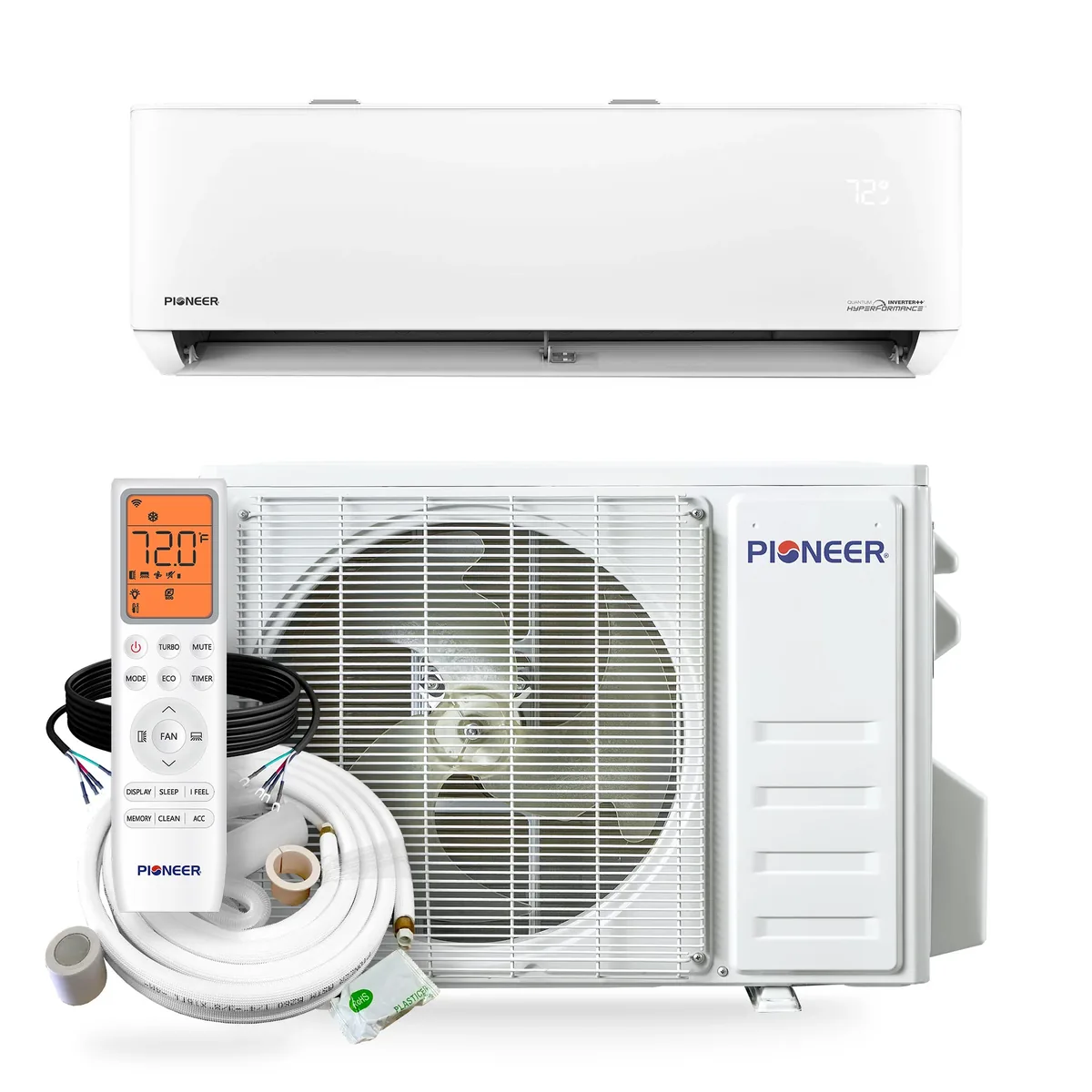 Series photo
Pioneer · Single-Zone
~$1,843
Cold-winter homes that want a hyper-heat-rated 1.5-ton head without paying Mitsubishi or Fujitsu prices.
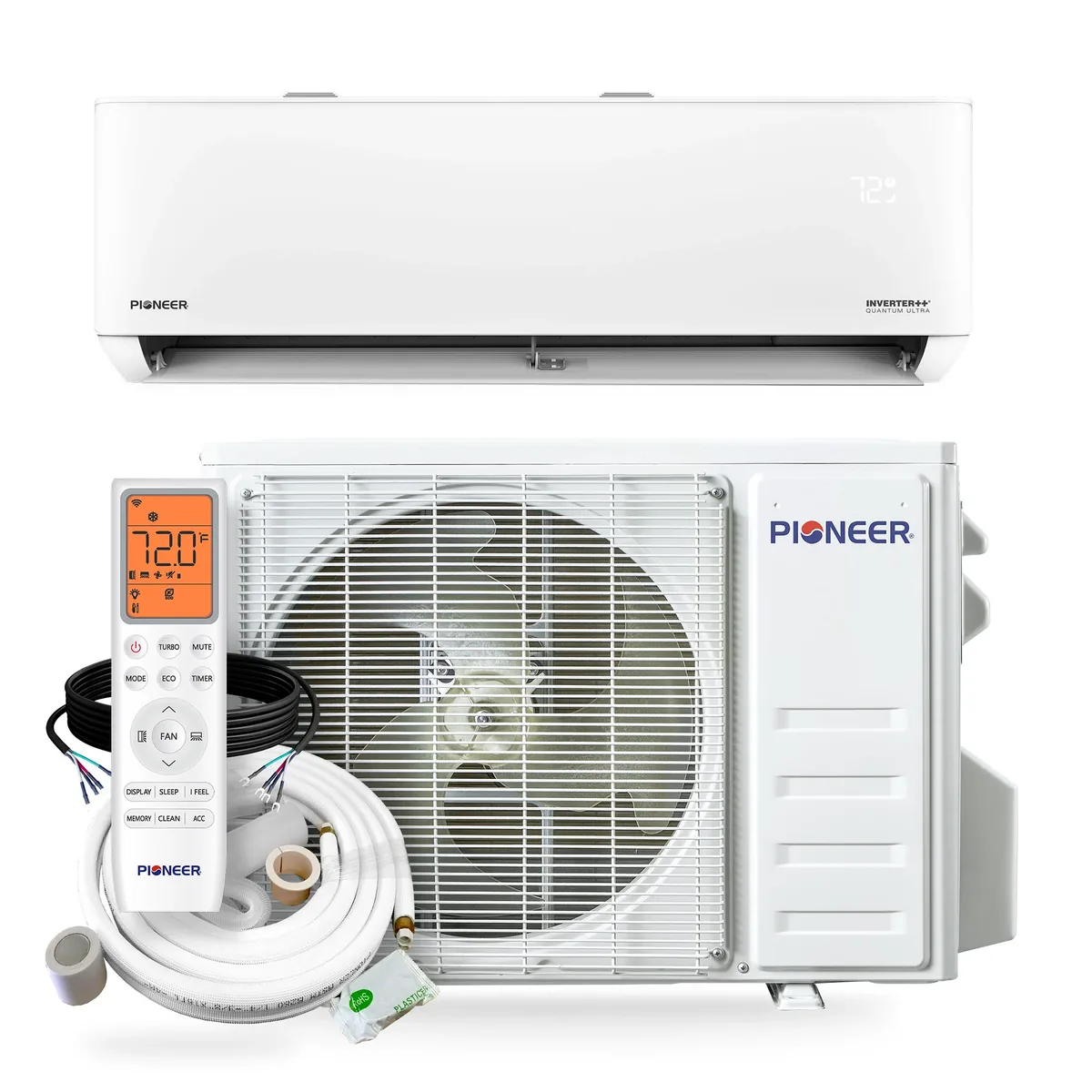
Pioneer · Single-Zone
~$1,503
Buyers who want a Wi-Fi-equipped, Energy Star-class 18k that handles cold snaps without paying for a full hyper-heat unit.