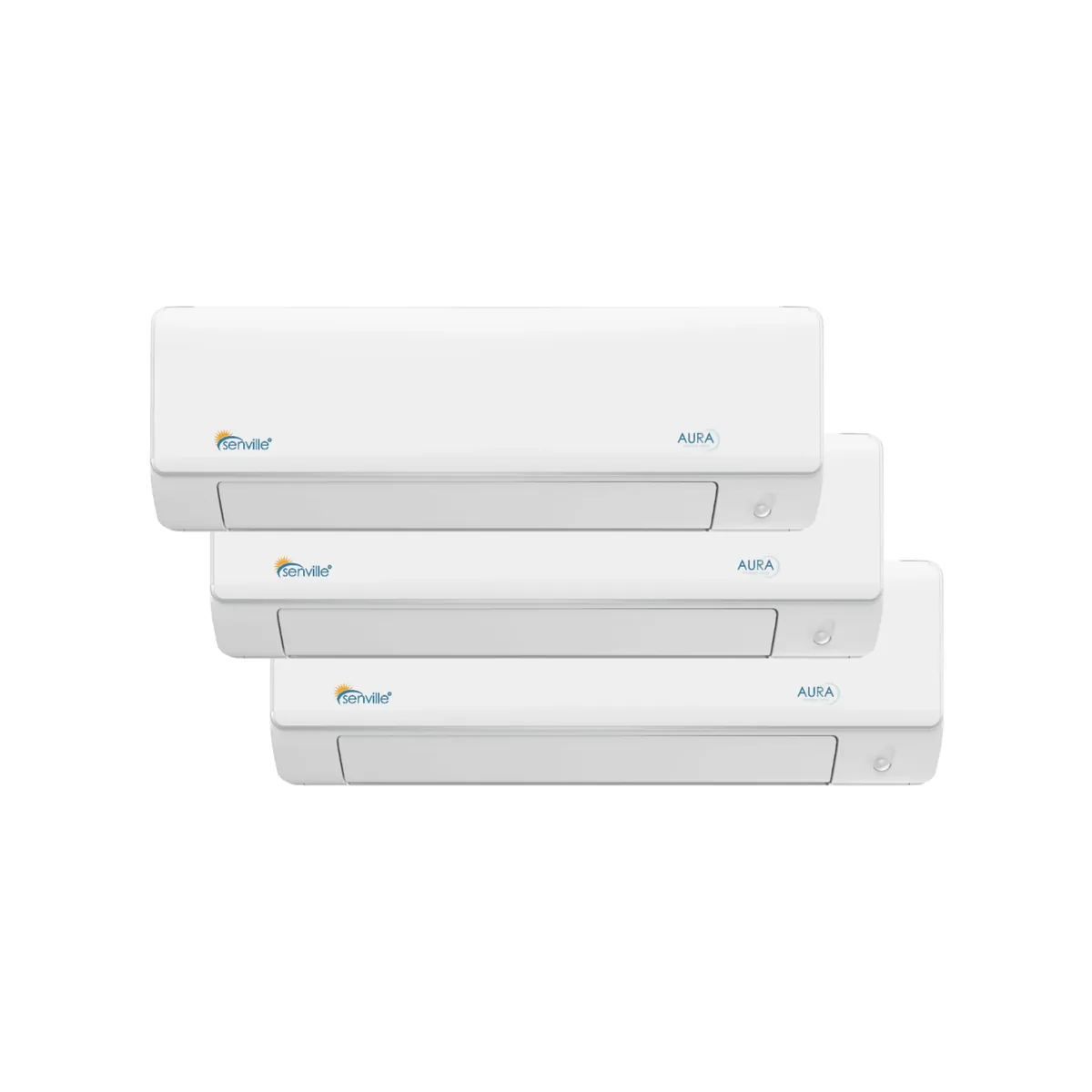
Senville · Multi-Zone
~$2,700
Senville AURA 27,000 BTU 3-Zone (9k+9k+9k)
Whole-small-home or three-bedroom coverage on a tight budget with only one viable condenser spot.
- BTU/h
- 27k
- Volts
- 230
- Zones
- 3
- SEER2
- 23
- HSPF2
- 10.5
- Heats to
- -22°F
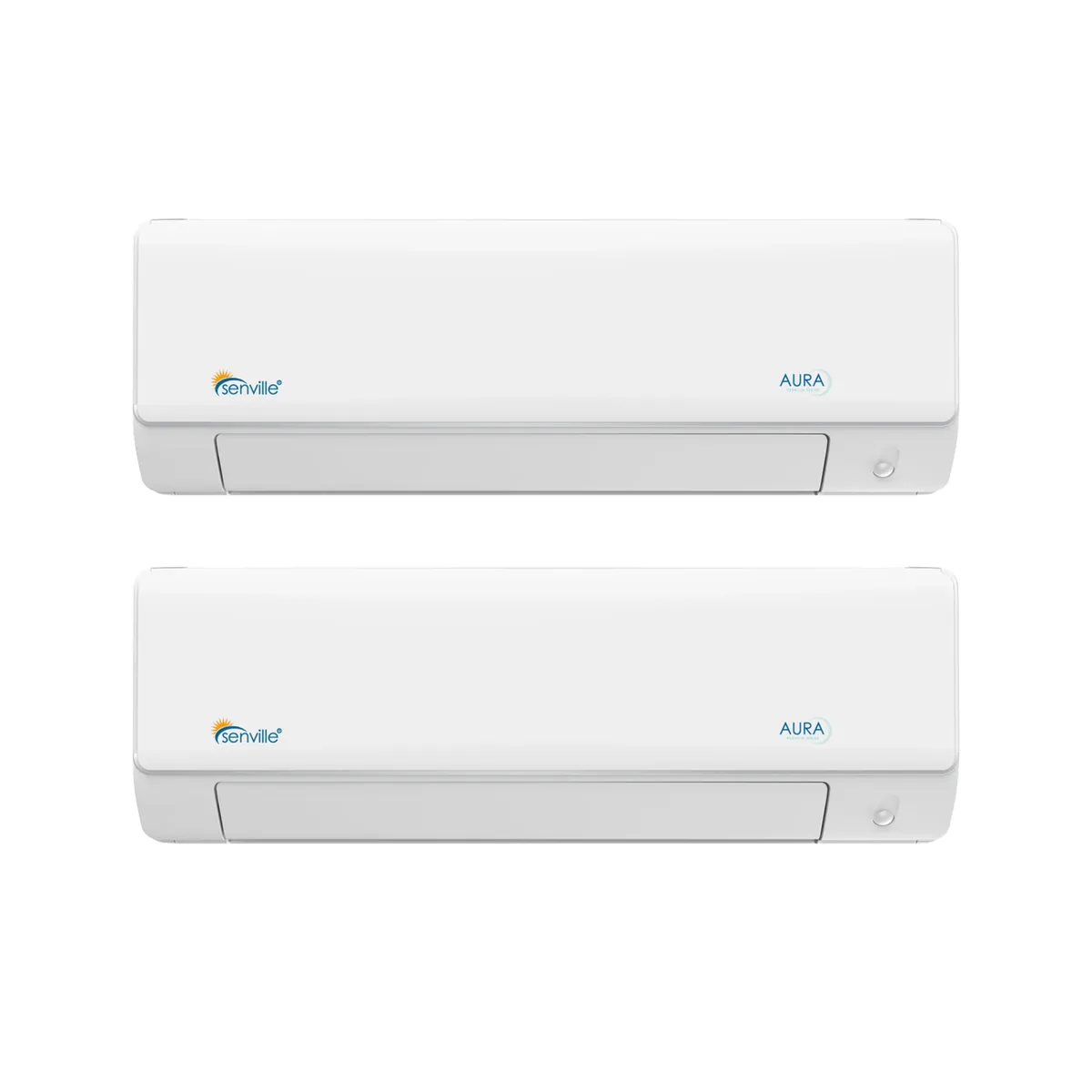
Senville · Multi-Zone
SENA/18HF/D
~$2,100approximate retailer price at last check, equipment only
Paid link: this site earns a commission on qualifying purchases. The price on Amazon may differ.
Best forBudget-minded two-room installs where one condenser location has to serve both zones.
Senville's AURA dual-zone is the value play for conditioning two bedrooms off one condenser: 25 SEER2, ENERGY STAR, Alexa control, and a -22°F cold-climate heating rating at a price that undercuts a single Mitsubishi head. The counterpoint installers raise: any multi is a single point of failure, and with two 9k heads on an 18k condenser, one room calling alone means the compressor is running well above what that room needs — expect some cycling and weaker humidity removal than two independent singles would give you. Two Senville 9k singles cost about the same and avoid that, if you can stomach two outdoor units. Where this kit makes sense is when outdoor placement or electrical capacity limits you to one condenser. Support is the other trade-off: Senville's North American phone support is decent for the class, but there's no dealer network behind it, so out-of-warranty repairs are on you and your local tech's willingness to touch it.
At 5°F it still makes 95% of its rated heat, according to the certified NEEP listing for this pairing. Senville rates it to keep running down to -22°F.
Pairing: SENA-18HF-MOA with non-ducted heads. From NEEP's ccASHP list; a different head or condenser posts different numbers.
Covers the Senville Aura line as a whole, summarised from 45 owner discussion threads, with the replies on the 12 most-discussed.
Owners mostly describe the Aura as a Midea unit with a different badge, and say it heats well in deep cold for the money. One owner who heated a whole house with Senville units says they still produced lots of heat at -25C, and another says two 18k units kept running at -36C, though an 18k owner notes that on the coldest, windiest days it runs less efficiently and the room falls behind. DIY installers like that anyone can buy one, and the newer indoor heads are easy to service: the whole blower wheel drops out for cleaning, and the control board sits at the front. Long-term reports are mostly calm, with one owner cleaning an Aura after four years and another describing about three years without faults from two Senville units.
Most complaints are about temperature control, not raw capacity. The sensor sits in the head, close to the coil, so the unit thinks the room is warmer than it is. Owners describe overshooting heads, rooms several degrees colder than the setpoint, and a head that sits in a low-fan standby without heating. The usual fix is Follow Me on the remote, but it switches off after every power cycle and needs line of sight. Heat mode bottoms out at 60F (16C), so a garage owner wanting 8-10C needs a workaround, and owners use the roughly 47F freeze-protection mode instead. A few new installs failed early: a Pc 04 code that support traced to a bad compressor, an unplugged fan-motor lead and a flashing FC code. Support is weekday business hours only, and one buyer says the warranty needs a licensed HVAC sign-off.
The evidence points to cold-climate DIYers and garage or shop owners who want low-temperature heat for the money and can live with some setpoint fiddling. A buyer comparing it with the Gree-built Sapphire found the 18k Aura basically as good on heating COP, and owners note that the Sapphire has a much larger outdoor unit for the same rating.
It's a genuine operating rating, but two asterisks matter: capacity declines well before -22°F, and the HSPF2 drops from 10.4 to 8.5 under the colder Region V rating — so cold-weather efficiency is average even though it keeps running. In a truly cold state, treat it as very capable primary heat with backup for design-cold nights.
The 18k condenser runs above its comfort zone for a single 9k load, which shows up as cycling and humidity swings — the standard multi-zone turndown problem, amplified on value-brand inverters. It behaves best when both zones run together, like two bedrooms overnight.
Mechanically it's approachable — the kit comes pre-charged with R-454B for up to 50 ft of total line, with everything included — but the flare connections and vacuum pull put it in pro-or-very-confident-DIY territory, and the 10-year compressor warranty is contingent on professional installation. Go past 50 ft of line and a certified tech must add charge regardless.
At ~$2,100 for the complete 9k+9k kit it's roughly half the equipment cost of the majors, because Senville is a Midea rebadge sold direct with no dealer network — support is phone and email with shipped parts. The 25 SEER2 / 10.4 HSPF2 ratings and Energy Star listing are real; what you're forgoing is local service infrastructure.
Yes — WiFi and Alexa control are included out of the box for both zones, which even the premium brands don't match without adapter purchases.
Senville · Multi-Zone
~$2,700
Whole-small-home or three-bedroom coverage on a tight budget with only one viable condenser spot.
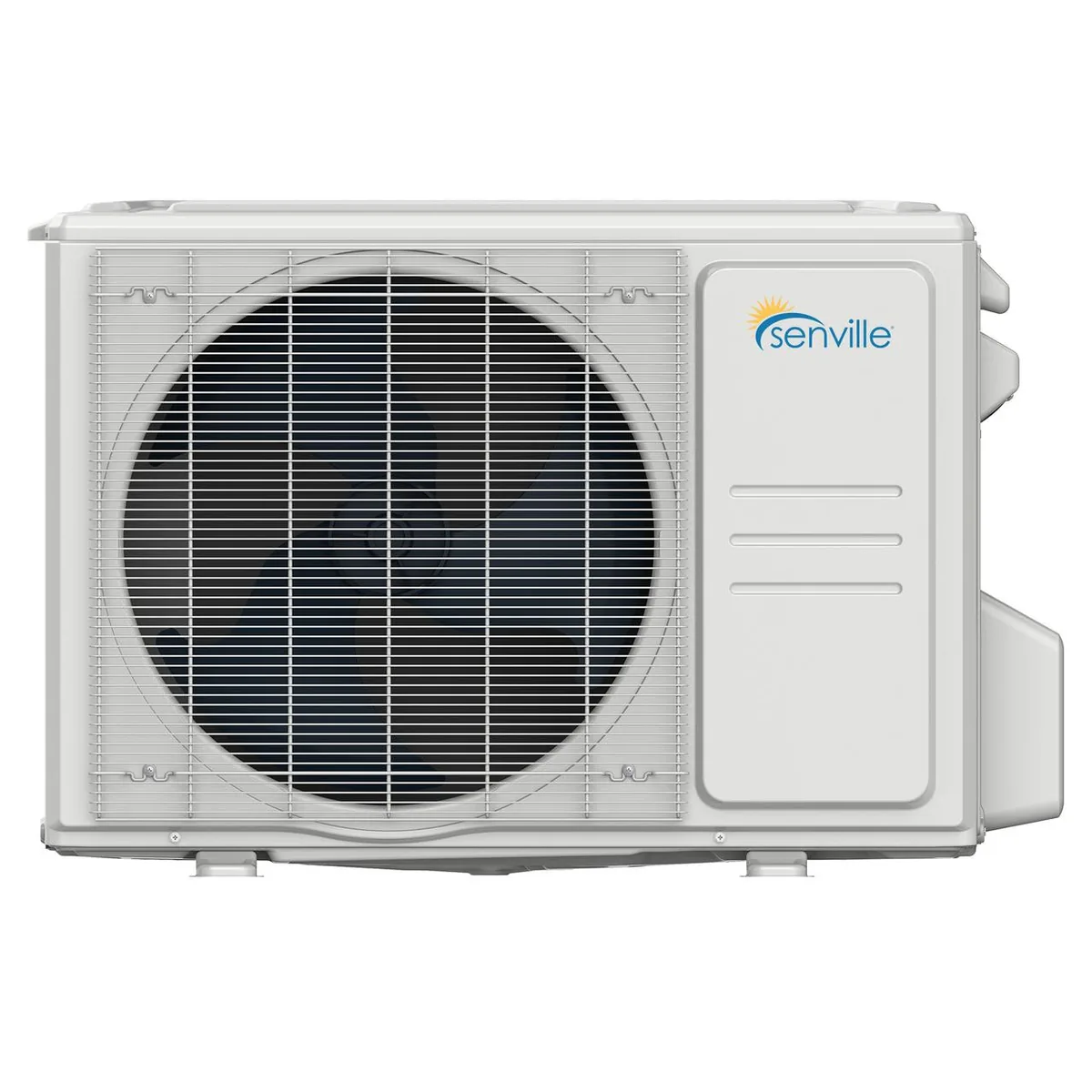
Senville · Multi-Zone
~$3,180
A four-room home in a cold climate that wants the lowest price and can wait on stock.
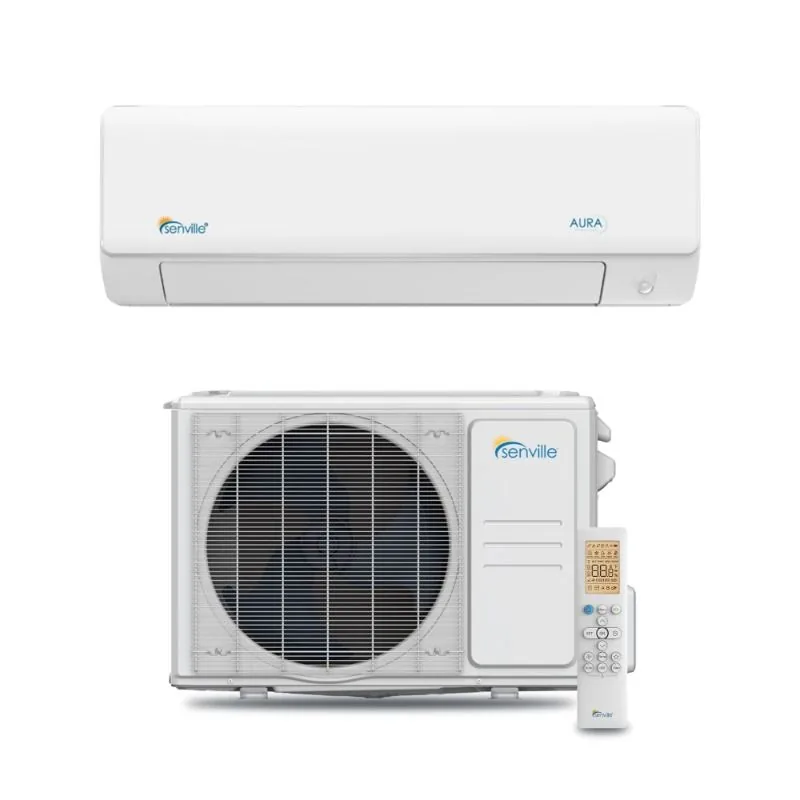
Senville · Single-Zone
~$2,090
Cold-climate buyers who want a 1.5-ton single head from an online dealer and will pay for a professional install.