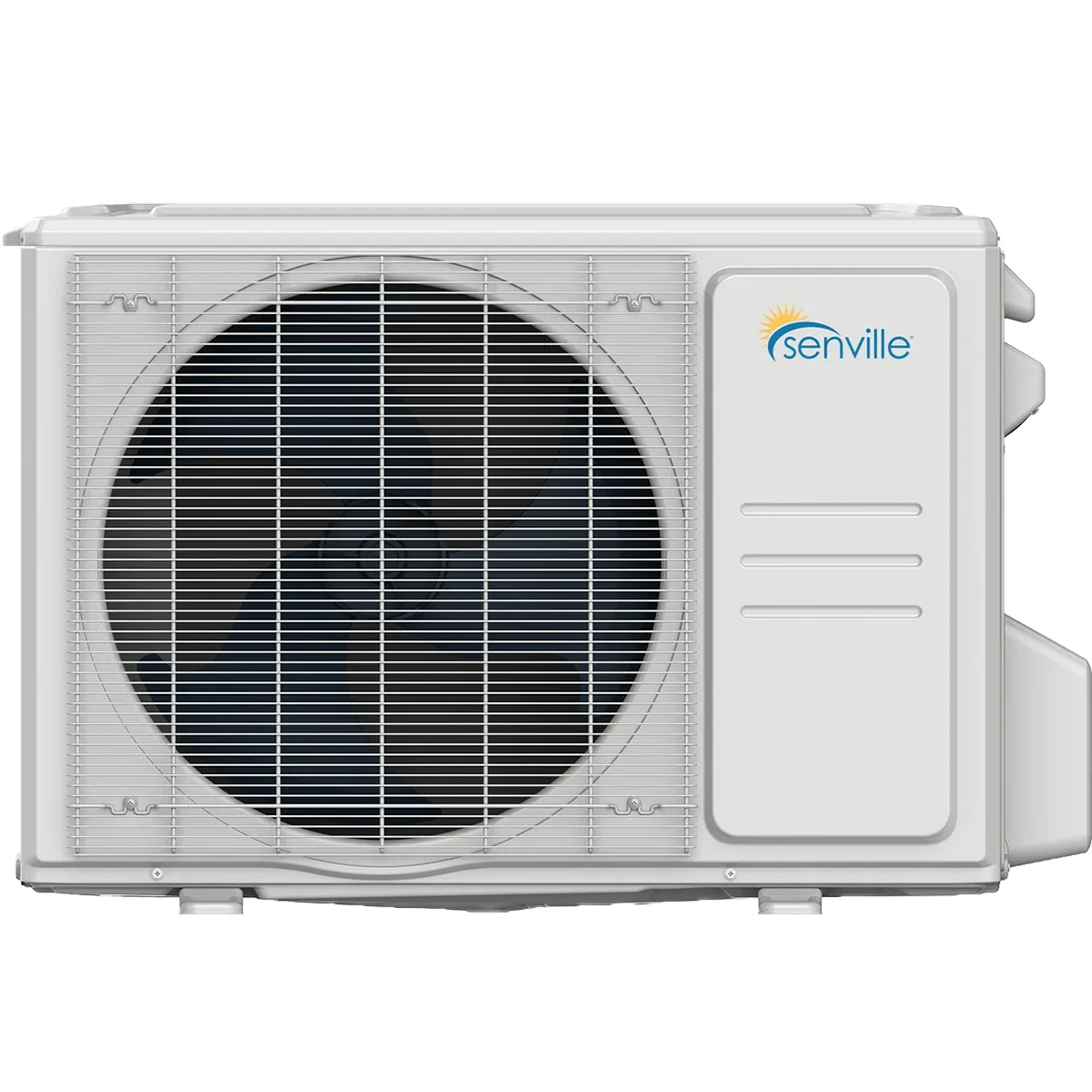
Senville · Single-Zone
~$1,250
Senville LETO 24,000 BTU
Large open spaces — basements, garages, or great rooms up to ~1,250 sq ft.
- BTU/h
- 24k
- Volts
- 208/230
- Refrig.
- R-454B
- SEER2
- 18.7
- HSPF2
- 9.3
- Heats to
- 5°F
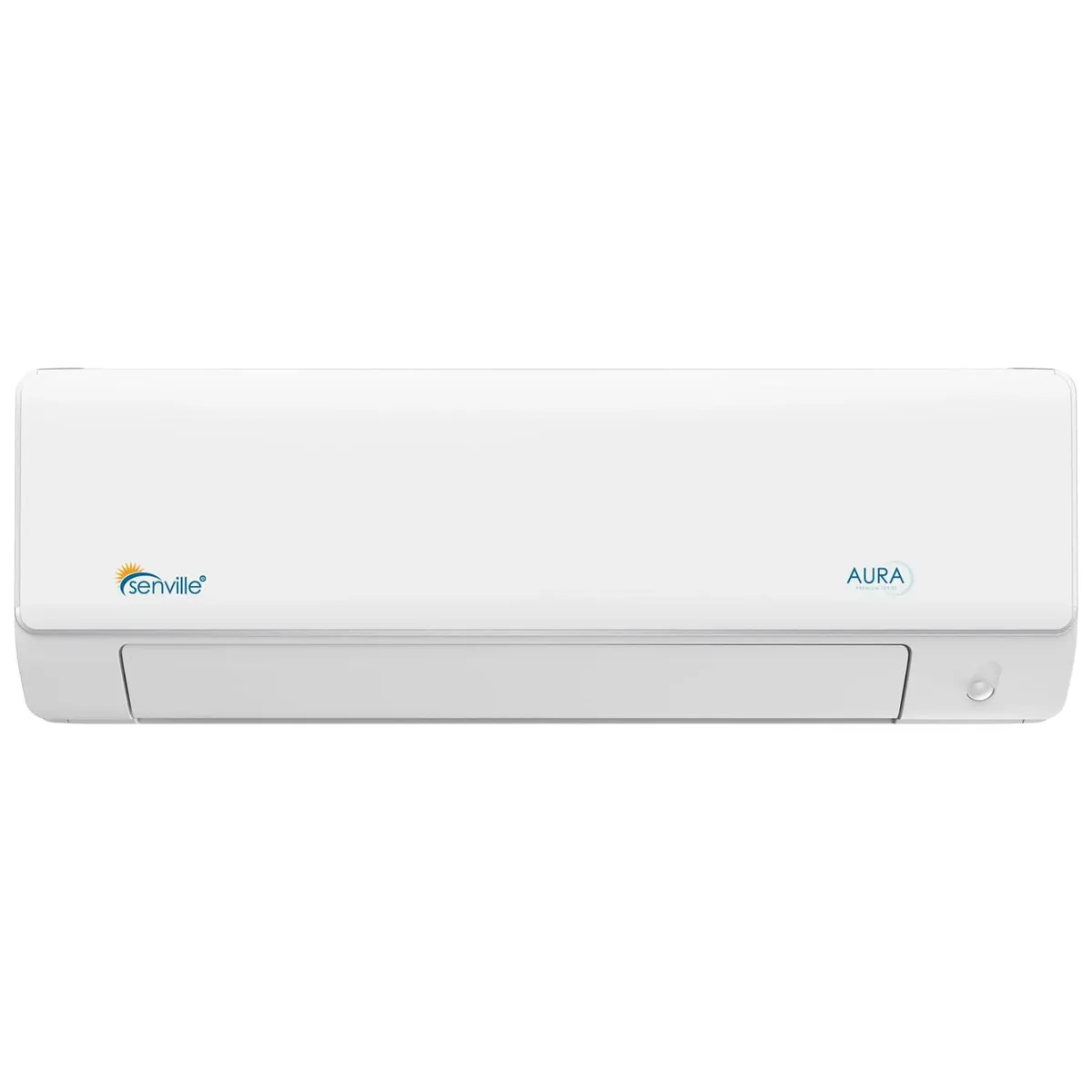
The maker's photo for this series, not this exact size; the outdoor unit grows with capacity
Senville · Single-Zone
SENA-12HF
~$1,400approximate retailer price at last check, equipment only
Paid link: this site earns a commission on qualifying purchases. The price on Amazon may differ.
Best forNorthern-climate rooms where the mini split is the primary heat source.
The AURA is Senville's hyper-heat flagship and the budget unit owners still recommend for cold climates: rated heating to -22°F, Energy Star certified, and a 10-year compressor warranty instead of the LETO's five. It's still rebadged Midea, but from the premium cold-climate platform, and owners in Vermont, Ontario, and Minnesota report it holding real heat output well below zero — expect roughly 75% capacity in extreme cold and audible defrost cycles. Its certified HSPF2 is 10.5 (Region IV); that still makes it one of the most efficient heat pumps sold under $1,500, and it typically qualifies for the 25C federal tax credit. Same caveats as all Senvilles: warranty demands licensed installation, and finding a pro to install an owner-supplied unit is the real project. If a mini split will be your primary heat, spend up for this over a LETO.
At 5°F it still makes 96% of its rated heat, according to the certified NEEP listing for this pairing. Senville rates it to keep running down to -22°F.
Pairing: SENA-12HF-OG with SENA-12HF-IGG. From NEEP's ccASHP list; a different head or condenser posts different numbers.
Covers the Senville Aura line as a whole, summarised from 45 owner discussion threads, with the replies on the 12 most-discussed.
Owners mostly describe the Aura as a Midea unit with a different badge, and say it heats well in deep cold for the money. One owner who heated a whole house with Senville units says they still produced lots of heat at -25C, and another says two 18k units kept running at -36C, though an 18k owner notes that on the coldest, windiest days it runs less efficiently and the room falls behind. DIY installers like that anyone can buy one, and the newer indoor heads are easy to service: the whole blower wheel drops out for cleaning, and the control board sits at the front. Long-term reports are mostly calm, with one owner cleaning an Aura after four years and another describing about three years without faults from two Senville units.
Most complaints are about temperature control, not raw capacity. The sensor sits in the head, close to the coil, so the unit thinks the room is warmer than it is. Owners describe overshooting heads, rooms several degrees colder than the setpoint, and a head that sits in a low-fan standby without heating. The usual fix is Follow Me on the remote, but it switches off after every power cycle and needs line of sight. Heat mode bottoms out at 60F (16C), so a garage owner wanting 8-10C needs a workaround, and owners use the roughly 47F freeze-protection mode instead. A few new installs failed early: a Pc 04 code that support traced to a bad compressor, an unplugged fan-motor lead and a flashing FC code. Support is weekday business hours only, and one buyer says the warranty needs a licensed HVAC sign-off.
The evidence points to cold-climate DIYers and garage or shop owners who want low-temperature heat for the money and can live with some setpoint fiddling. A buyer comparing it with the Gree-built Sapphire found the 18k Aura basically as good on heating COP, and owners note that the Sapphire has a much larger outdoor unit for the same rating.
It's built for exactly that — rated heating down to -22°F with roughly 75% capacity retention in extreme cold, which is why it's the budget unit cold-climate threads allow. Its heating output modulates from 4,000 to 14,500 BTU, so it handles mild days gracefully too. As with any sole heat source, having some backup for power outages is still wise.
If heating is the mission, yes: you get a -22°F floor versus 5°F, 25.4 SEER2 versus 21.2, a certified 10.5 HSPF2 versus 8.7, Energy Star certification, and a 10-year compressor warranty versus the LETO's five. If you're mostly cooling in a mild climate, the LETO delivers most of the experience for half the money.
It's Energy Star certified and commonly eligible for the 25C federal tax credit, which can claw back a meaningful chunk of the ~$1,400 price. Pair that with utility cold-climate heat pump rebates where available — this is the price tier where incentives change the math most.
Mount the condenser above your local snow line and plan drainage, because defrost cycles produce meltwater that will ice up a pad or walkway if it has nowhere to go. Defrost is also audible — a whooshing/gurgling sound owners sometimes mistake for a malfunction. It's normal cold-climate heat pump behavior, not a defect.
The usual Senville ones: licensed professional installation plus registration are required, so a DIY install forfeits coverage. It also needs a dedicated 208/230V circuit.
Senville · Single-Zone
~$1,250
Large open spaces — basements, garages, or great rooms up to ~1,250 sq ft.
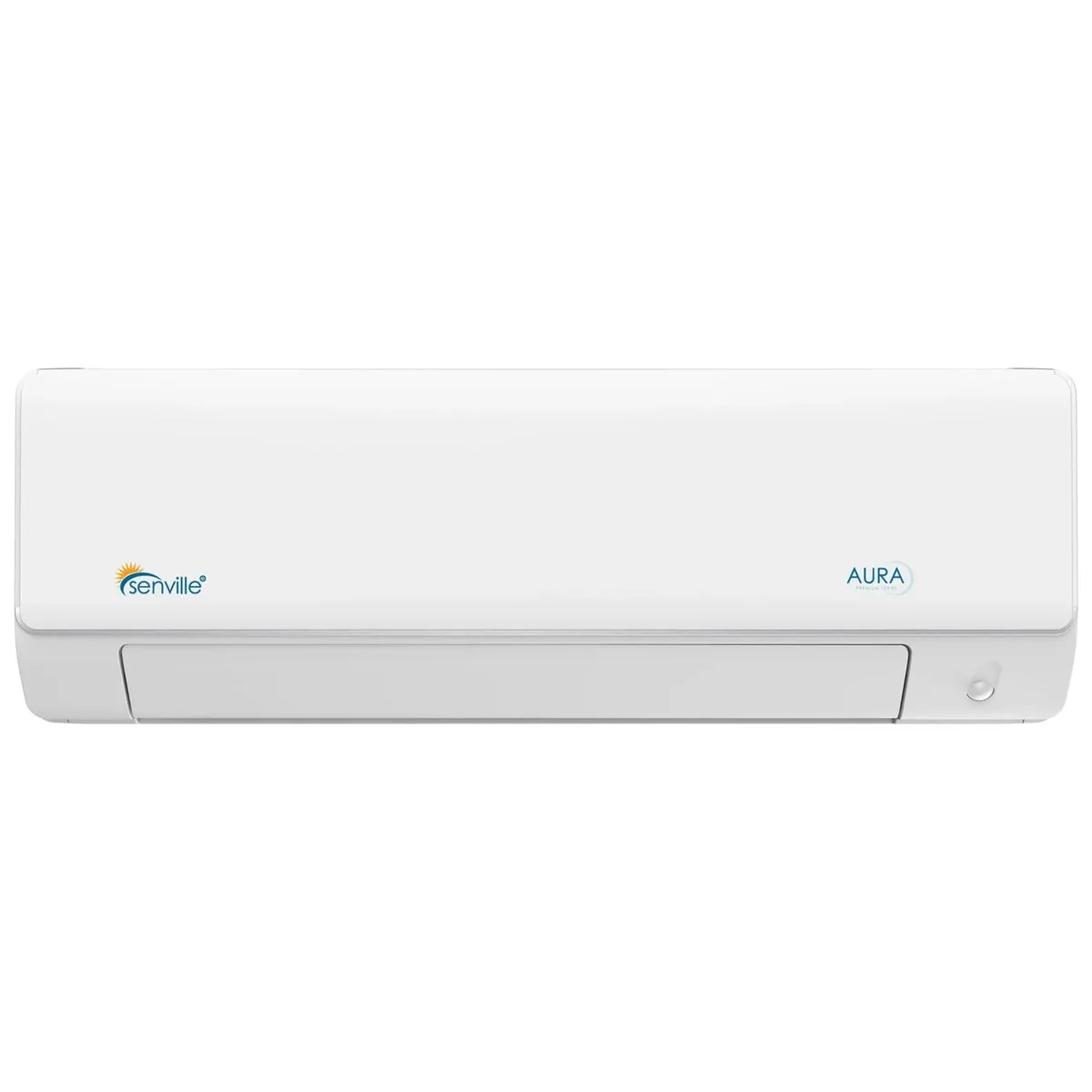 Series photo
Senville · Single-Zone
~$1,650
Small, well-insulated rooms in cold climates where a pro will install a high-efficiency 9k head.
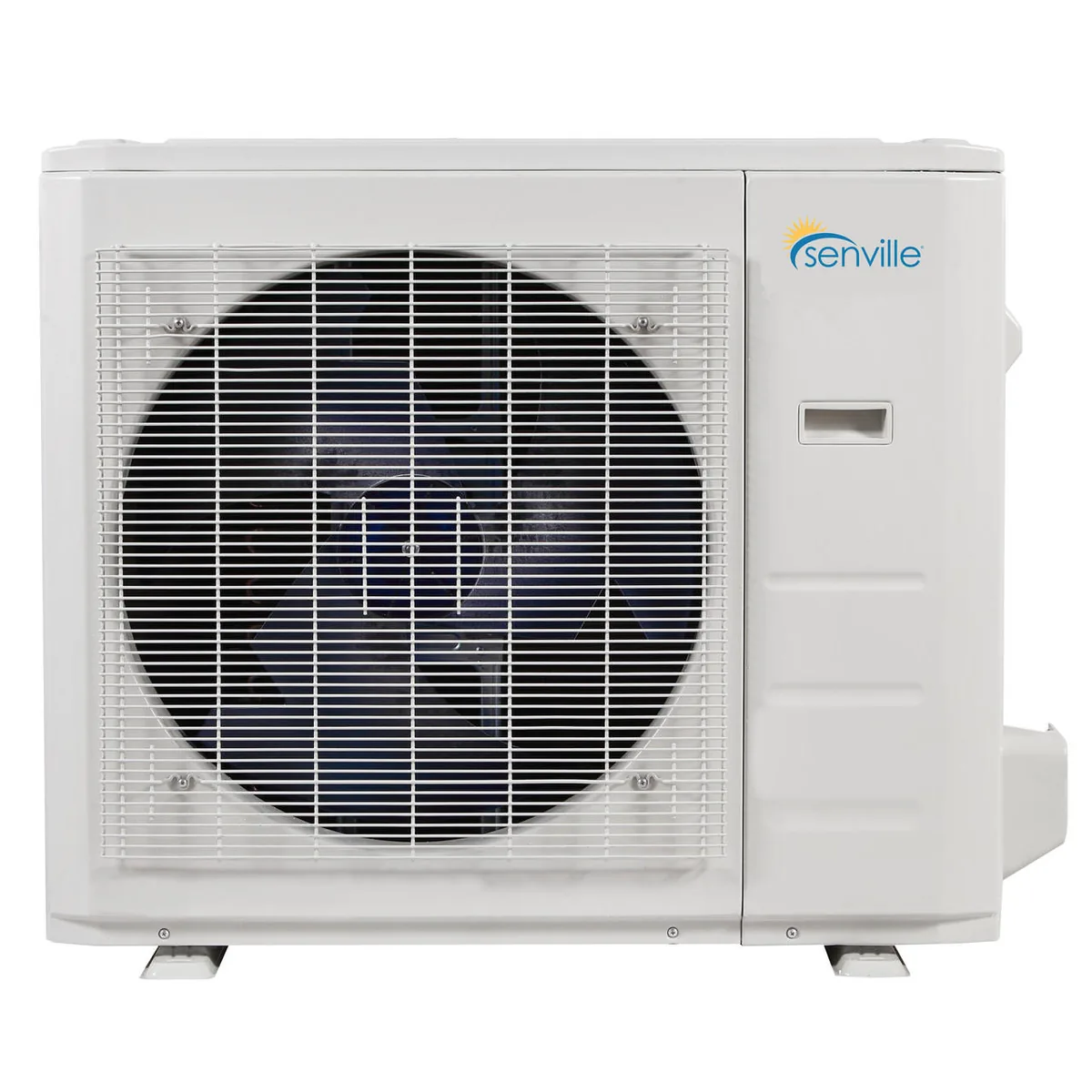
Senville · Single-Zone
~$1,700
Large open living areas in cold states where the budget matters more than the badge.