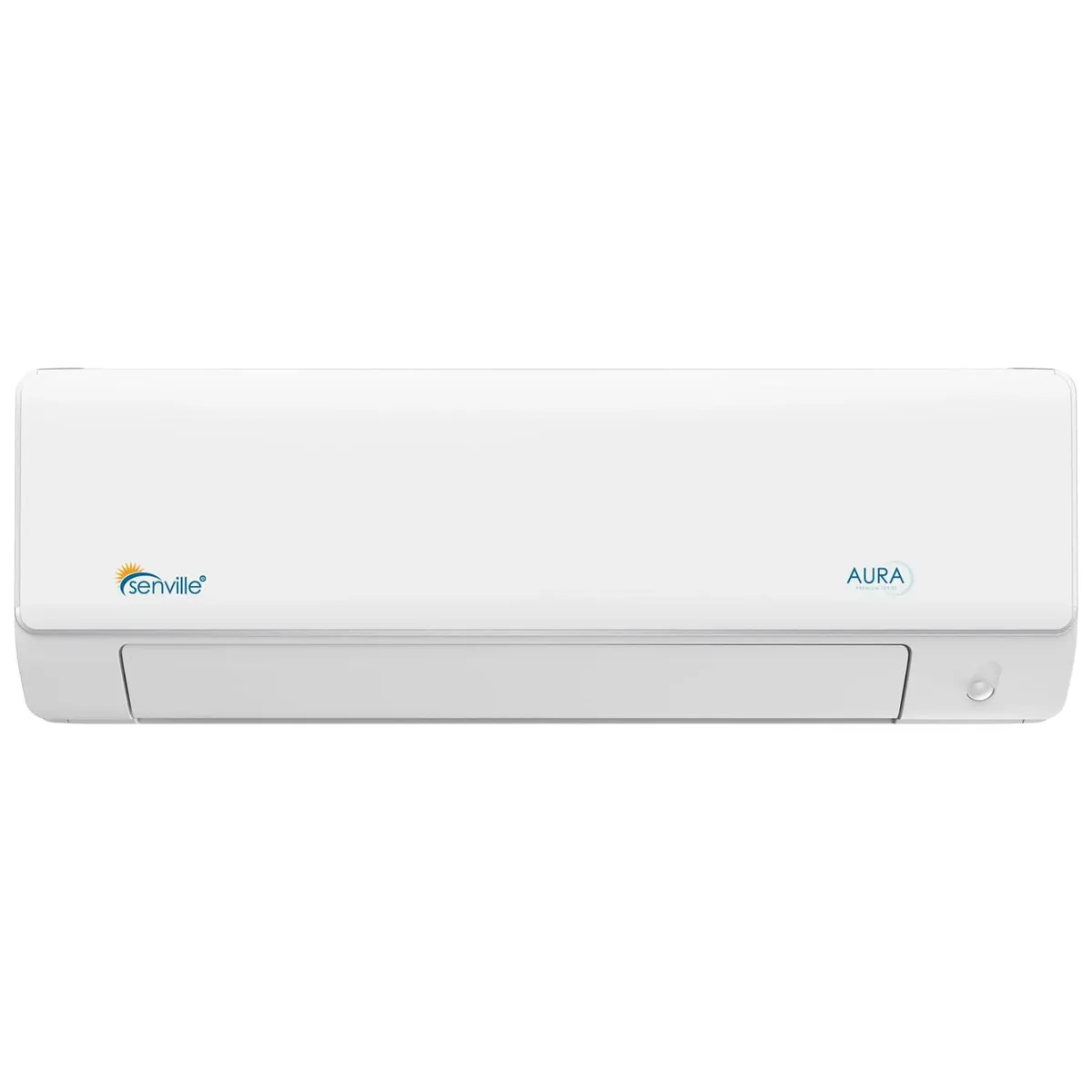
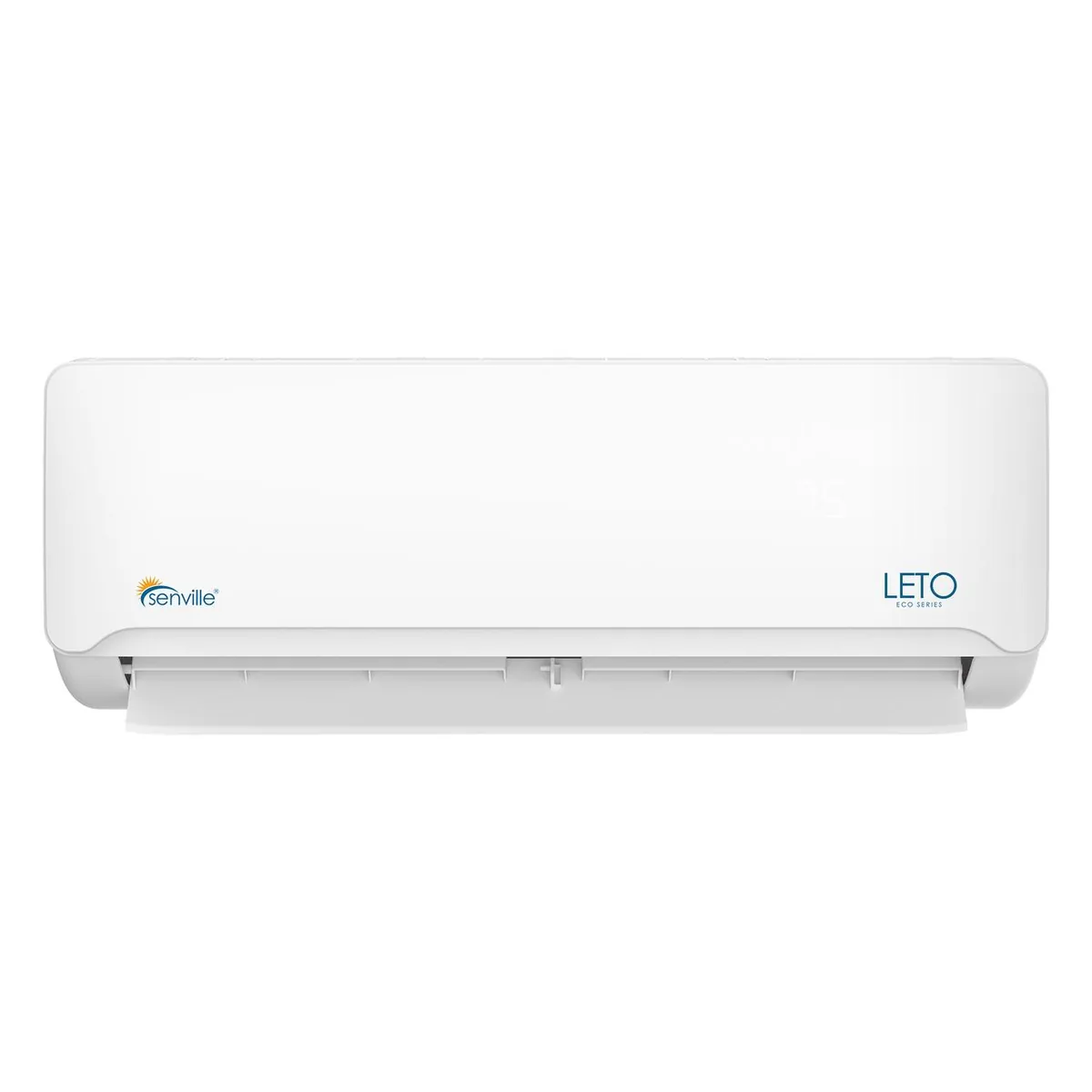
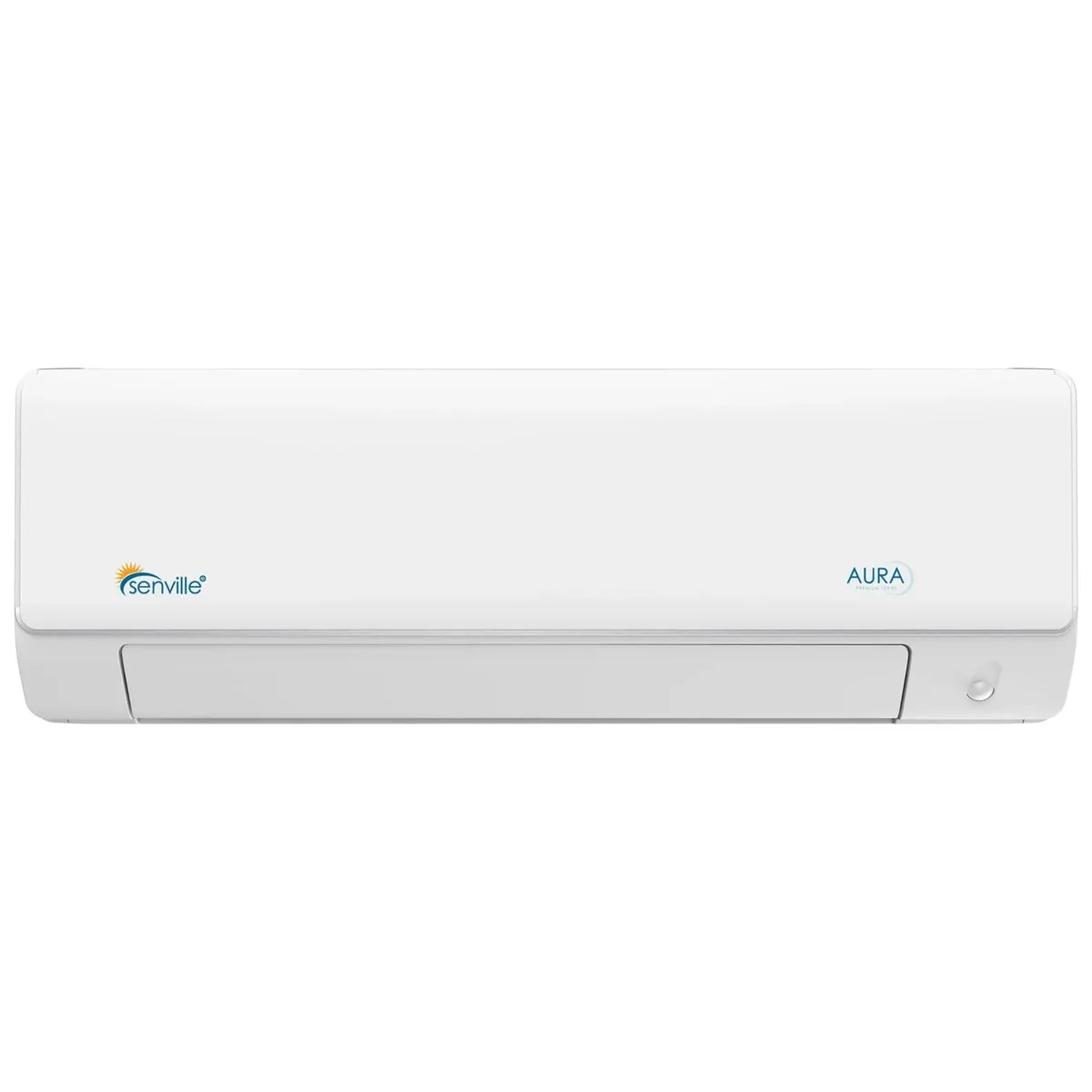
Covers the Senville Aura line as a whole, summarised from 45 owner discussion threads, with the replies on the 12 most-discussed.
Owners mostly describe the Aura as a Midea unit with a different badge, and say it heats well in deep cold for the money. One owner who heated a whole house with Senville units says they still produced lots of heat at -25C, and another says two 18k units kept running at -36C, though an 18k owner notes that on the coldest, windiest days it runs less efficiently and the room falls behind. DIY installers like that anyone can buy one, and the newer indoor heads are easy to service: the whole blower wheel drops out for cleaning, and the control board sits at the front. Long-term reports are mostly calm, with one owner cleaning an Aura after four years and another describing about three years without faults from two Senville units.
Most complaints are about temperature control, not raw capacity. The sensor sits in the head, close to the coil, so the unit thinks the room is warmer than it is. Owners describe overshooting heads, rooms several degrees colder than the setpoint, and a head that sits in a low-fan standby without heating. The usual fix is Follow Me on the remote, but it switches off after every power cycle and needs line of sight. Heat mode bottoms out at 60F (16C), so a garage owner wanting 8-10C needs a workaround, and owners use the roughly 47F freeze-protection mode instead. A few new installs failed early: a Pc 04 code that support traced to a bad compressor, an unplugged fan-motor lead and a flashing FC code. Support is weekday business hours only, and one buyer says the warranty needs a licensed HVAC sign-off.
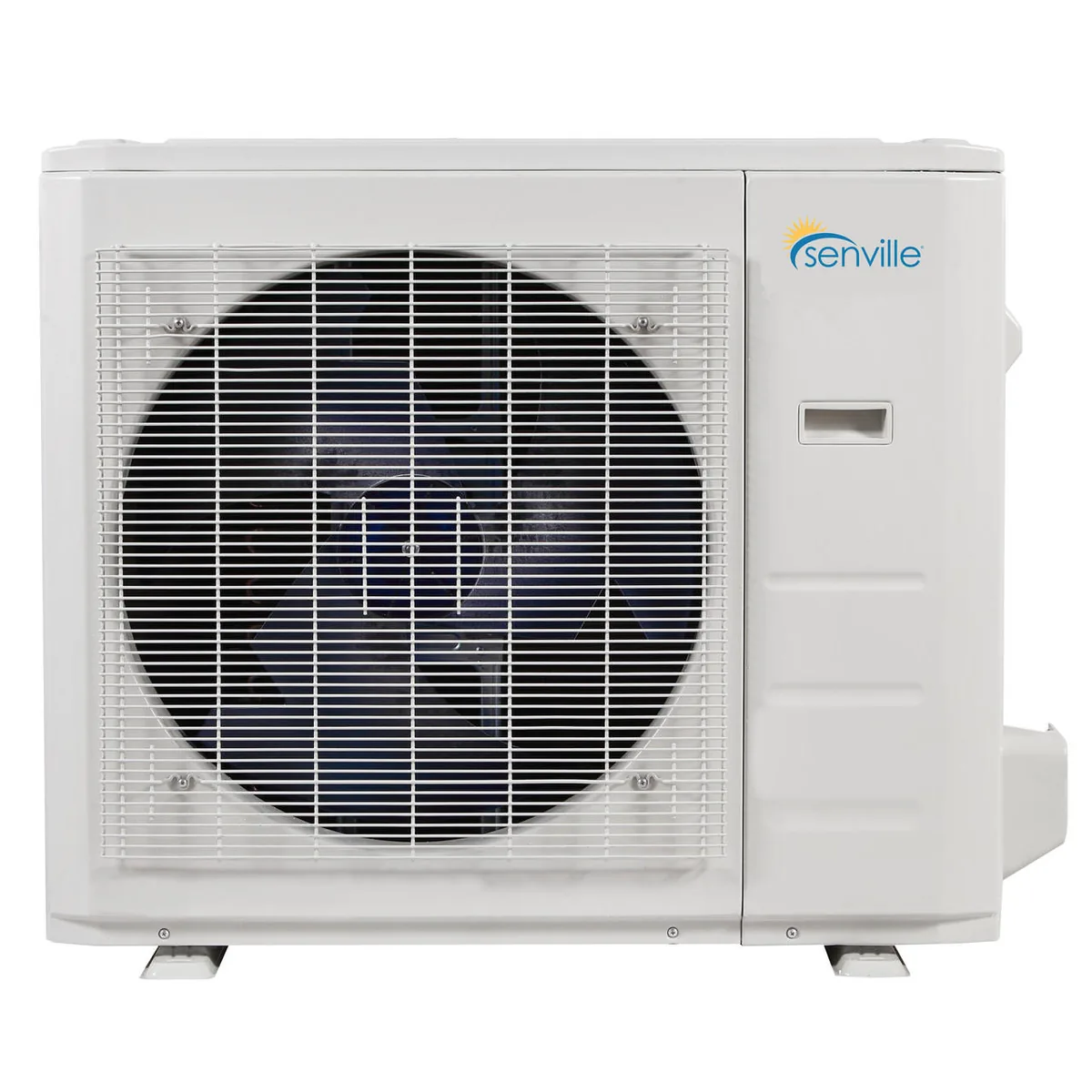
The evidence points to cold-climate DIYers and garage or shop owners who want low-temperature heat for the money and can live with some setpoint fiddling. A buyer comparing it with the Gree-built Sapphire found the 18k Aura basically as good on heating COP, and owners note that the Sapphire has a much larger outdoor unit for the same rating.
What owners like
- +Keeps making heat in hard cold: one owner heating a whole house reports lots of heat at -25C, and one owner's two 18k units ran through -36C without being switched off
- +The newer indoor head has a drop-out blower wheel. One owner cleaned an Aura in about 30 minutes, against two hours for an older Senville Leto
- +The control board sits at the front of the head, which one installer says makes board swaps quick
- +Easy for a DIY buyer to get, and one owner posted a clean self-install of two units that held vacuum and passed decay tests
- +Runs on the Midea platform, so Follow Me, the NetHome app and third-party IR controllers such as Cielo work with it
- +Freeze-protection mode holds about 47F, and one owner keeps a vacant rental cabin on it to stop the water system freezing
- +Owners report years of use: one cleaned an Aura head after four years of running, and another says two Senville bedroom units have been flawless for about three years while a Carrier beside them needed two warranty repairs
Common complaints
- −The temperature sensor sits in the head near the coil, so it reads warm. Owners describe heads overshooting and rooms several degrees under the setpoint, worse when it is cold and windy
- −Follow Me fixes the reading, but it turns off after every power cycle and drops out when the remote loses line of sight
- −Heat mode will not go below 60F (16C), so holding a garage at 8-10C means using freeze-protection mode or a workaround
- −Some heads stop heating in certain conditions: one would not heat below 40% fan speed, one sat in low-fan standby below 0C, and a new 24k would not heat under 30F outside
- −Defrost can seem rigid: one owner reports a cycle every 90 minutes whether or not it is needed, and others saw defrost at 48F, or minutes after start-up with no frost on the coil
- −Some new units failed early, including a Pc 04 code that ended with the owner paying about $400 for a replacement unit
- −Support is weekday 9-to-5 only, and one buyer says Senville wants a licensed HVAC sign-off before honouring the warranty
- −Buyers say Senville does not publish low-temperature capacity data, so they look it up by the unit's AHRI certificate number
 Series photo