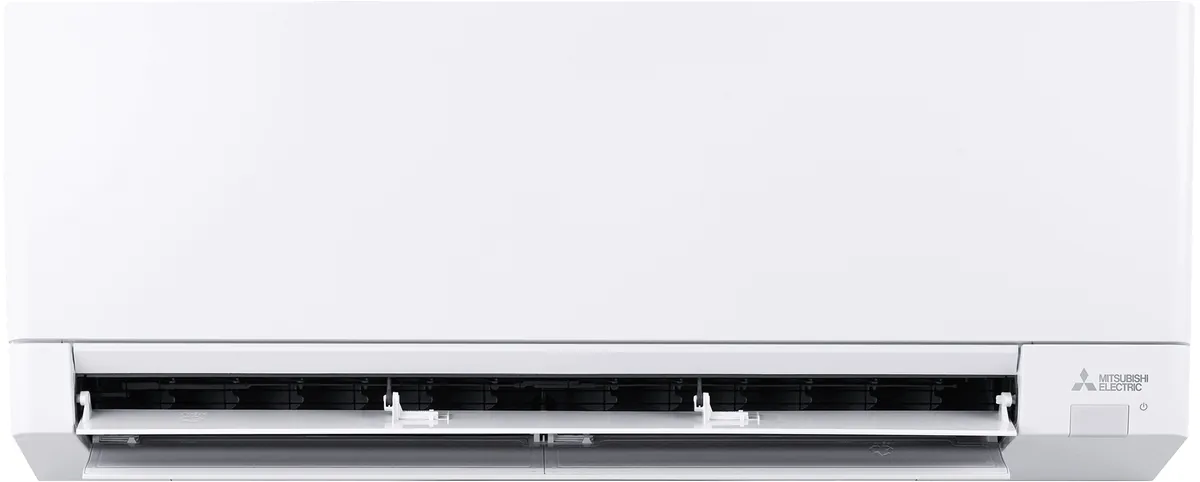
 Series photo
Mitsubishi Electric · Single-Zone
~$4,815
Mitsubishi MSZ-GX24NL Hyper-Heat 24,000 BTU
Big open spaces in cold climates where a single large head is the plan.
- BTU/h
- 24k
- Volts
- 208/230
- Refrig.
- R-454B
- SEER2
- 21.5
- HSPF2
- 10
- Heats to
- -22°F
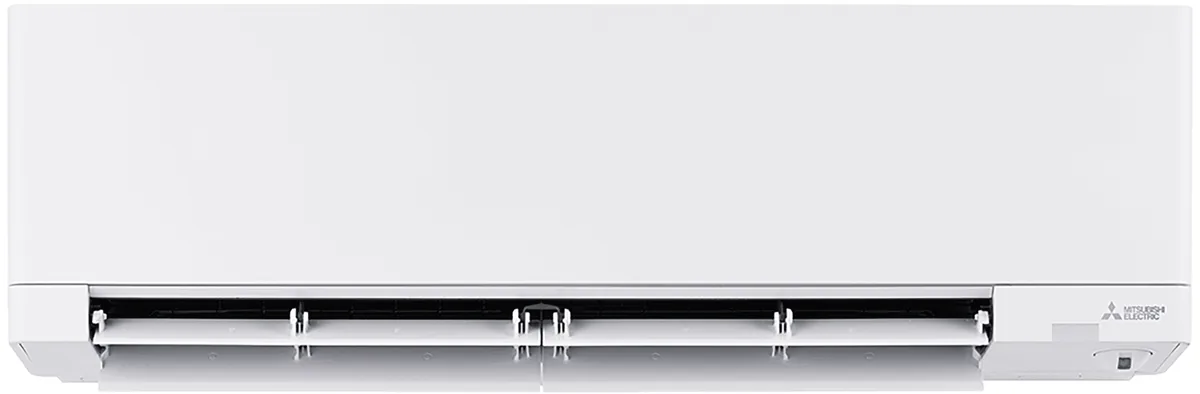
The maker's photo for this series, not this exact size; the outdoor unit grows with capacity
Mitsubishi Electric · Single-Zone
MSZ-FX24NL / MUZ-FX24NLHZ
~$4,997approximate retailer price at last check, equipment only
Best forLarge cold-climate spaces where one premium head with maximum heat output is wanted.
The FX24 is the largest deluxe Hyper-Heat wall unit Mitsubishi sells, rated 23.5 SEER2 and 10.5 HSPF2, with a published maximum of 36,200 BTU of heat and operation guaranteed to -22°F. At about $5,000 for equipment it is also one of the most expensive single-zone wall systems on the market. Fujitsu's 24k Orion XLTH is $4,560 with better HSPF2 (11.9), and Mitsubishi's own GX24 is $4,815 for a lower-efficiency version of the same output. What you get for the extra money is the FX head: more precise airflow control and the best sound figures in the range, plus Mitsubishi's installer network. Wi-Fi is built in. Treat this as a purchase for large cold-climate rooms where one big head is the right layout.
At 5°F it makes more heat than its 47°F rating (134%), according to the certified NEEP listing for this pairing. Mitsubishi Electric rates it to keep running down to -22°F.
Pairing: MUZ-FX24NLHZ with MSZ-FX24NL. Checked October 8, 2026 on NEEP's ccASHP list; a different head or condenser posts different numbers.
Covers the Mitsubishi M-Series wall units (FS/FX, GL/GX, EX, WX) line as a whole, summarised from 440 owner discussion threads, with the replies on the 12 most-discussed.
Most buyers pick Mitsubishi wall units for reliability and installer support, and the owners who are happy tend to stay happy. A Vermont household on its fourth winter with an 18k and a 12k cold-climate pair says the units kept running through a -16F morning and kept the house mostly warm. Another owner's 3/4-ton unit iced into a block in a storm and was still blowing 110F air. Others describe single heads that have run for years without trouble. Owners also say the units feel plain next to cheaper brands: no factory Wi-Fi, no coil dry-out after cooling, and no temperature display on the head.
The complaints are mostly about control, not hardware. The sensor sits in the head, high on the wall and near the warm air leaving it. One reply puts it at 4-6 degrees above the room, with a 2-3 degree swing before the unit reacts. In winter that shows up as a head blowing lukewarm air on low fan while the room stays cold. On multi-zone systems, small bedroom heads such as a GX09 can push a room far past the setpoint: one owner set 54F and got 74F, with 125F air coming out. One owner who wired a home-built external temperature sensor into the system says it halved the energy use, though another with the iSee sensor still had cool air in sub-zero weather. Running costs at New England electricity rates shock some owners, and a few multi-zone systems needed repeated service calls. One Boston household lost three compressors and two control boards in four years on a five-head system.
The evidence fits cold-climate buyers who want a dealer-installed system and plan to sort out temperature sensing early, or to size outdoor units 1:1 so small bedroom heads are not overdriven. Owners agree that install quality and sizing matter as much as the brand.
It is one of the strongest in the catalog on this front: NEEP certifies 19,800 BTU at 47°F and 26,600 BTU at 5°F with a COP of 2.04, and Mitsubishi rates heating to -22°F. Output rises above the 24,000 BTU label at 5°F.
The Fujitsu is about $4,559 and rated 24 SEER2 and 11.9 HSPF2; the FX24 is about $4,997 at 23.5 and 10.5. The Fujitsu is cheaper and more efficient on paper. The FX24 reaches -22°F against -15°F and includes Wi-Fi.
Mitsubishi lists about 1,000 sq ft, which means a large open living area. One head will not reach closed-off bedrooms down a hallway, so a house with many rooms is better served by two smaller heads.
A licensed contractor install and online registration. Otherwise 5 years parts and 7 years compressor.
Series photoMitsubishi Electric · Single-Zone
~$4,815
Big open spaces in cold climates where a single large head is the plan.
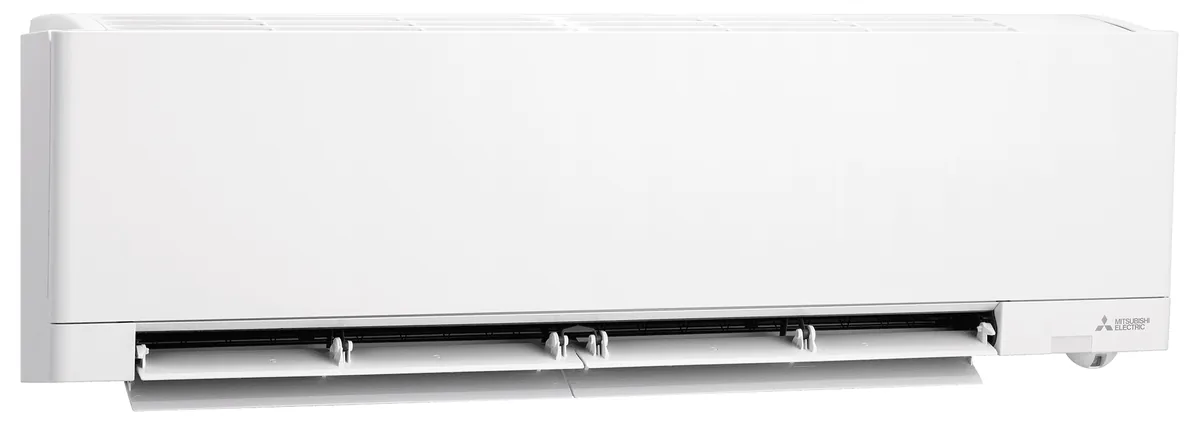
Mitsubishi Electric · Single-Zone
~$4,187
Large open rooms or small open-plan houses in cold climates where one head has to be the main heat source.
 Series photo
Mitsubishi Electric · Single-Zone
~$3,880
Large rooms in cold climates where a contractor-installed, well-supported system matters.