MRCOOL
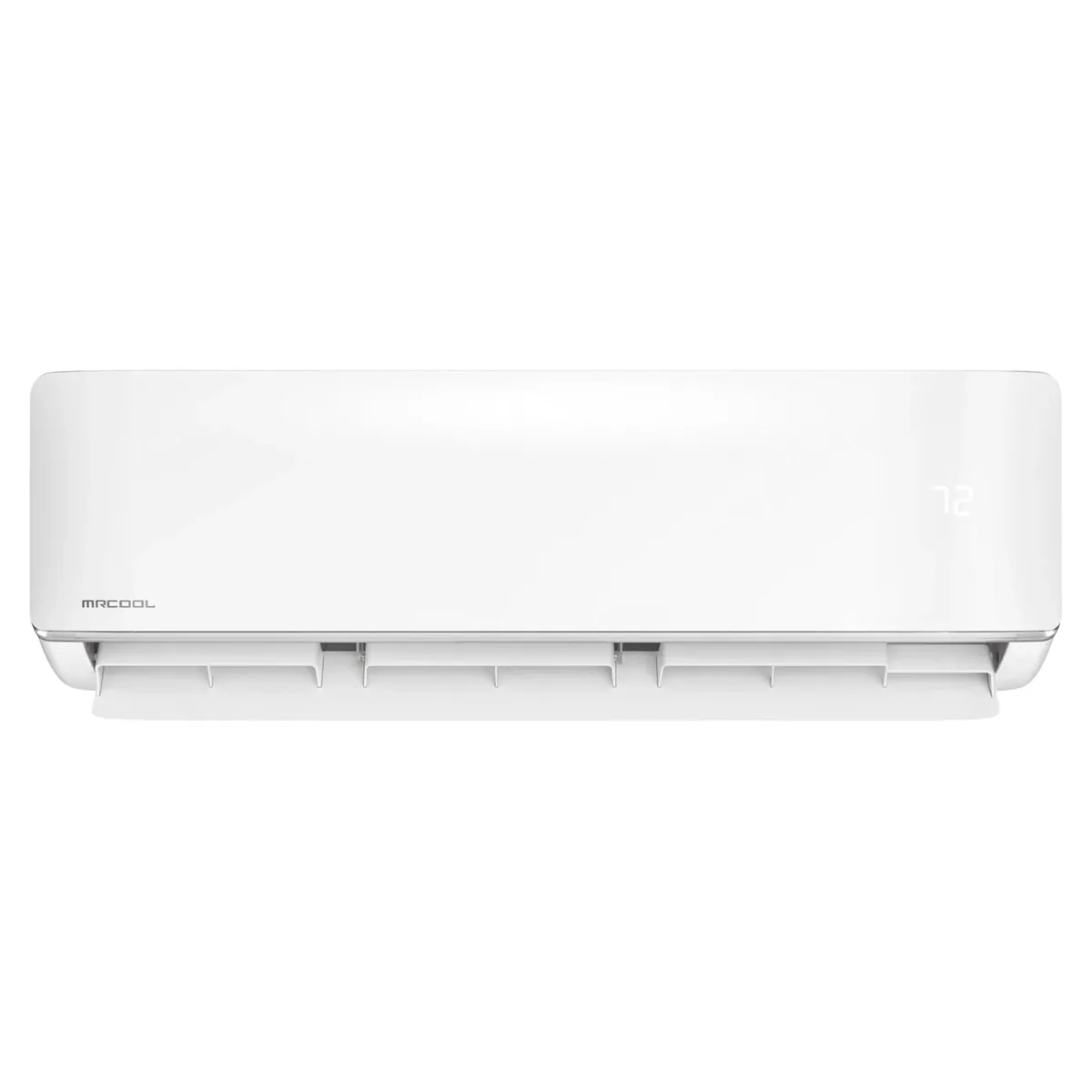
MRCOOL DIY 5th Gen 18,000 BTU
Replaces the MRCOOL DIY 4th Gen 18,000 BTU.
Heating, not cooling, is the story on the 5th Gen 18k. HSPF2 rises to 11.5 on the AHRI-certified pairing, from 9.8 on the R-410A 4th Gen it replaces, the best heating number in the DIY single-zone range, while cooling efficiency is flat (22.5 SEER2 against 22.7). NEEP lists it as a cold-climate heat pump with 12,800 BTU of maximum output at 5°F, about 71% of rated capacity, at a COP of 2.44, which is also the highest 5°F efficiency of any MRCOOL DIY size. In practice that makes the 18k the one to pick if winter heat matters more to you than summer cooling. The electrical ask is modest for a 1.5-ton unit: MRCOOL specs a 20A maximum fuse. It sells for about $2,609 on sale at HVAC Pro Sales, a few hundred above the 4th Gen's usual price. The usual caveat applies: there is very little long-term owner history on the 5th Gen yet.
Specifications
Cold-weather output
71% of rated heat at 5°FFrom the certified NEEP cold-climate listing for this pairing; MRCOOL rates it to run down to -13°F.
- Rated heat at 47°F
- 18,000 BTU/h
- Max heat at 5°F
- 12,800 BTU/h
Pairing: DIY-18-HP-C-230D25-O with DIY-18-HP-WMAH-230D25-O. Checked September 30, 2026 on NEEP's ccASHP list; a different head or condenser posts different numbers.
Highlights
Pros
- ✓11.5 HSPF2 on the certified pairing, up from 9.8 on the 4th Gen
- ✓Holds 12,800 BTU at 5°F at a 2.44 COP, the best 5°F efficiency of any MRCOOL DIY unit
- ✓20A maximum fuse on a 208/230V circuit, a lighter electrical requirement than most 1.5-ton units
- ✓Energy Star certified and NEEP cold-climate listed, which is what most heat-pump rebate programs check
Cons
- ✗Still needs a 240V circuit and disconnect, which is the most common surprise cost for DIY buyers
- ✗About $400 more than the 4th Gen 18k's typical price
- ✗Cooling efficiency didn't improve (22.5 SEER2 vs 22.7)
- ✗Too new for any long-term owner history, so reliability past the first couple of years is unknown
- ✗No interchangeability with 4th Gen linesets, couplers, or boards
Common Questions
Is the 18k or the 24k the better buy for heating?
What breaker does it need?
Is the 18k too big for a 400 sq ft bedroom?
How cold can it heat?
Why does my new 5th Gen show a leak error right after install?
Compare the MRCOOL DIY 5th Gen 18,000 BTU
Related mini-splits
More from MRCOOL →
The 2-ton is what people buy for a 1,000 sq ft shop, big open living area, or whole small home, and Home Depot reviewers repeatedly say some version of 'saved $3,000 doing it myself.' It delivers 23k BTU cooling / 25k heating with 20.5 SEER2 — a step down in efficiency from the 12k/18k but still Energy Star. Owner sentiment is the same trade as the rest of the line: install day goes shockingly well, and the risk shows up in years 2-4 as board or sensor failures for an unlucky minority. At this size the DIY premium gets real — you're paying roughly $800-1,000 over an equivalent pro-install unit — but a single pro install quote usually exceeds that gap. Watch freight shipping: the most common negative reviews are dented condensers and cracked air handler mounts on delivery, so photograph the pallet before signing. HD has run it near $2,900 while Ingram's sells it around $2,500, so shop around.
Like the 4th Gen before it, the 5th Gen 12k runs on a 115V circuit, so most panels can feed it without a 240V run, and it installs the same way: precharged quick-connect lineset, half a day with hand tools. What changed is underneath. The refrigerant is now R-454B, efficiency rose from the 4th Gen's 22.5 SEER2 / 9.0 HSPF2 to 23.5 / 10.2 on the AHRI-certified pairing, and the system is on the NEEP cold-climate list at 8,400 BTU of maximum heat at 5°F (about 70% of its 12,000 BTU rating) with a COP of 2.09 there. That 5°F figure is the honest way to read the '-13°F' operating floor: it still runs that cold, but a room sized right on the 47°F rating will come up short on the coldest nights. The price went the wrong way: about $2,370, where the 4th Gen sold for $1,700, though HVAC Pro Sales has run it near $2,060 in a blowout sale. It's also new enough that there is little long-term owner history yet, so the 4th Gen's control-board track record is the best guide to what MRCOOL hardware does in years three to five.
The 3-ton is the brute-force option: one head, 36,000 BTU, up to ~1,500 sq ft of open space. Shop owners and barndominium builders love it because it's the only way to get this much DIY capacity on a single circuit without zoning. Efficiency drops to 18 SEER2 — MRCOOL publishes a legacy 12 HSPF heating figure but no verified HSPF2 for this size, which is why we leave that field empty — so in a hot climate the 24k paired with better insulation is often smarter money. Owner feedback echoes the line-wide pattern: painless install, strong output, occasional board gremlins down the road, and freight damage as the top delivery complaint at this weight. One physics reality check from owner threads: a single wall head cannot evenly condition a 1,500 sq ft house with rooms and doors — this size shines in open shops, garages, and great rooms, not chopped-up floor plans. It's regularly discounted as 4th Gen inventory clears for the 5th Gen.
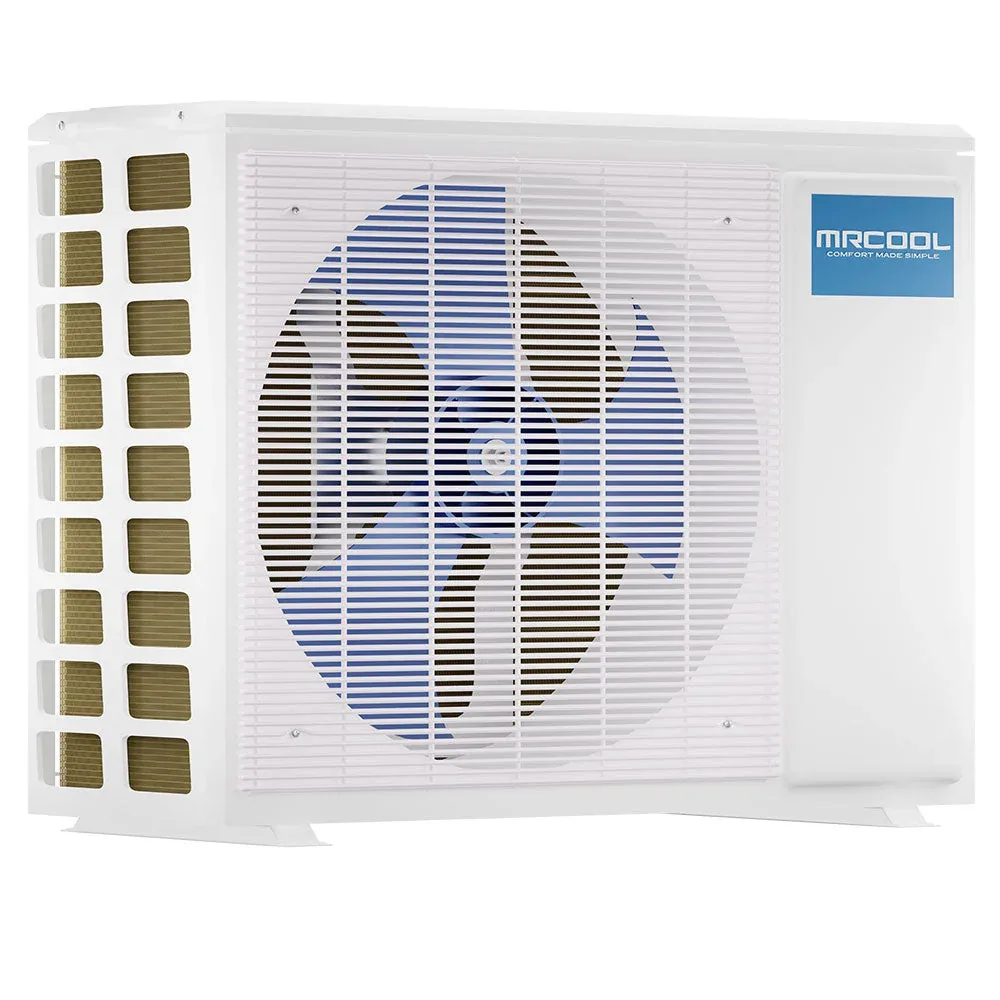
The 18k is the sweet spot in the DIY lineup for a big master suite, open basement, or 600-750 sq ft apartment, and it posts the best efficiency numbers of the whole 4th Gen range at 22.7 SEER2. Owners describe the install as identical to the 12k — the condenser is just heavier (two people for stairs) — and the recurring gotcha in reviews is electrical, not refrigerant: people assume it's plug-and-play and then discover they need a 240V circuit, disconnect box, and whip. Reliability chatter mirrors the rest of the DIY line: strong first-year impressions, quiet operation, solid -13°F heating, with the long-tail complaints centered on control boards and the occasional leaky quick-connect that MRCOOL diagnoses over email photos. Costco has run this size in the $1,300-1,500 range during clearance events, so patient shoppers can beat typical retail by hundreds. Register the warranty immediately — owners who skipped it got stuck at 1-year coverage.
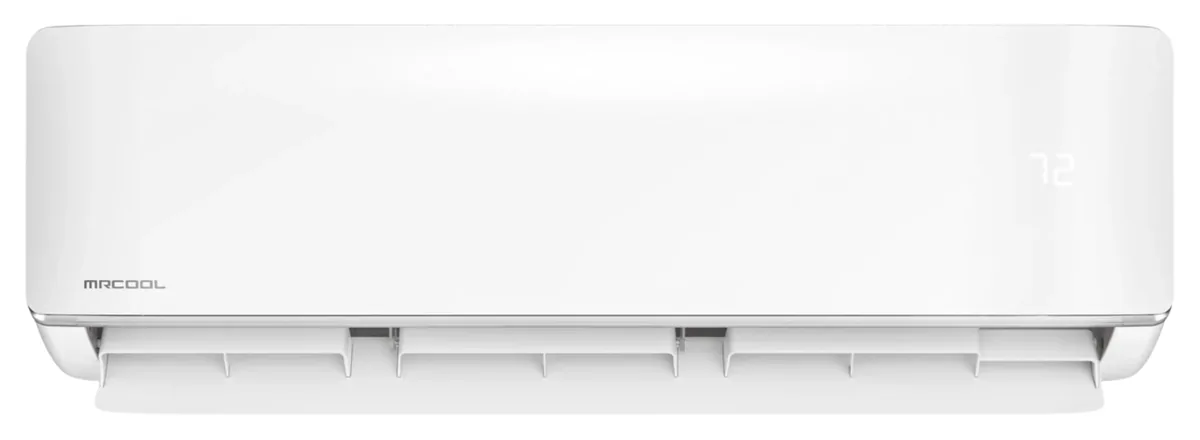
Of the 5th Gen single-zone sizes, the 24k gained the most cooling efficiency: 22.7 SEER2 on the certified pairing, up from 20.5 on the R-410A 4th Gen it replaces, with HSPF2 up slightly from 9.2 to 9.5. Cold-weather output is less impressive. NEEP shows 16,100 BTU of maximum heat at 5°F, about 67% of the 24,000 BTU rating, at a COP of 2.0, and unlike the 12k and 18k it carries plain Energy Star certification but not the cold-climate designation, which matters if a rebate program requires the cold-climate tier. The install is the familiar quick-connect job with heavier lifting. It sells for about $3,029 on sale. For a 750-1,000 sq ft open area in a hot or mixed climate it's a sound pick; for a cold-climate main floor, the 5°F number says to size up or keep backup heat.
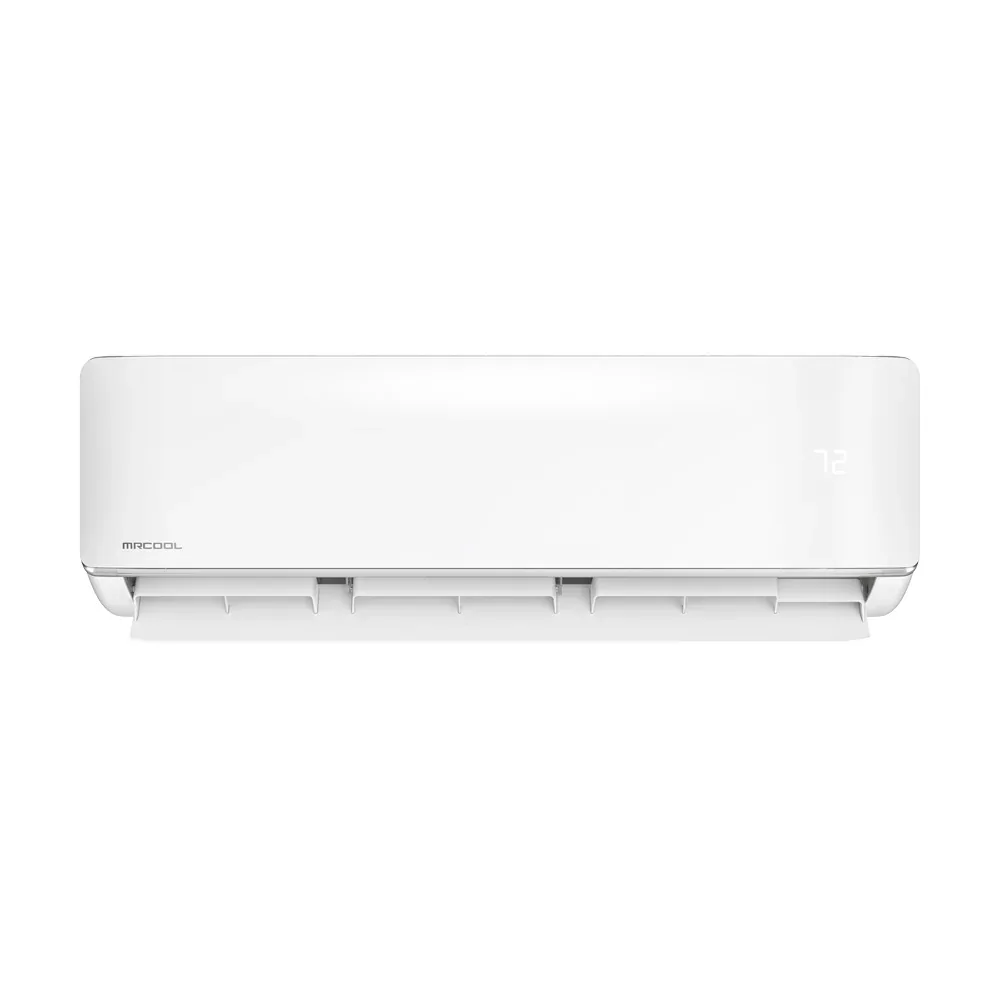
The biggest single head MRCOOL sells for DIY install, the 3-ton 5th Gen is built for one large open space. It takes over from the R-410A 4th Gen 36k, and on efficiency it is essentially the same machine on new refrigerant: 18 SEER2, as before. What's new is a published heating rating. MRCOOL never gave the 4th Gen 36k an HSPF2; the AHRI-certified 5th Gen pairing has one, at 8.5, the lowest of the 5th Gen DIY sizes. NEEP's cold-climate data is the sobering part. Maximum heat at 5°F is 22,000 BTU, about 61% of the 36,000 BTU rating, at a COP of 1.97, the steepest drop-off in the DIY series (only the budget Easy Pro keeps less). So the 36k still makes the most total heat, but it loses the most of it as temperatures fall. The case for it hasn't changed: one quick-connect install for a big open shop, barndominium, or great room, at about $3,469 on sale. Two 18k units would cost about $1,750 more, but they heat more efficiently, make more combined heat at 5°F, and leave you with heat if one fails, which is worth pricing if the space is broken up.